

The Only Two Knots You Will Ever Need
I know many writers who like to show off their knot-tying skills. Some of them, including myself, have books on tying fishing knots. In one of my books, I have an illustrated section that shows step-by-step how to tie 39 different fishing knots. That’s right...39 different knots! No wonder beginning fishermen who read these fishing books will look confused when they hold a hook and line in their hands for the first time and wonder how to put them together.
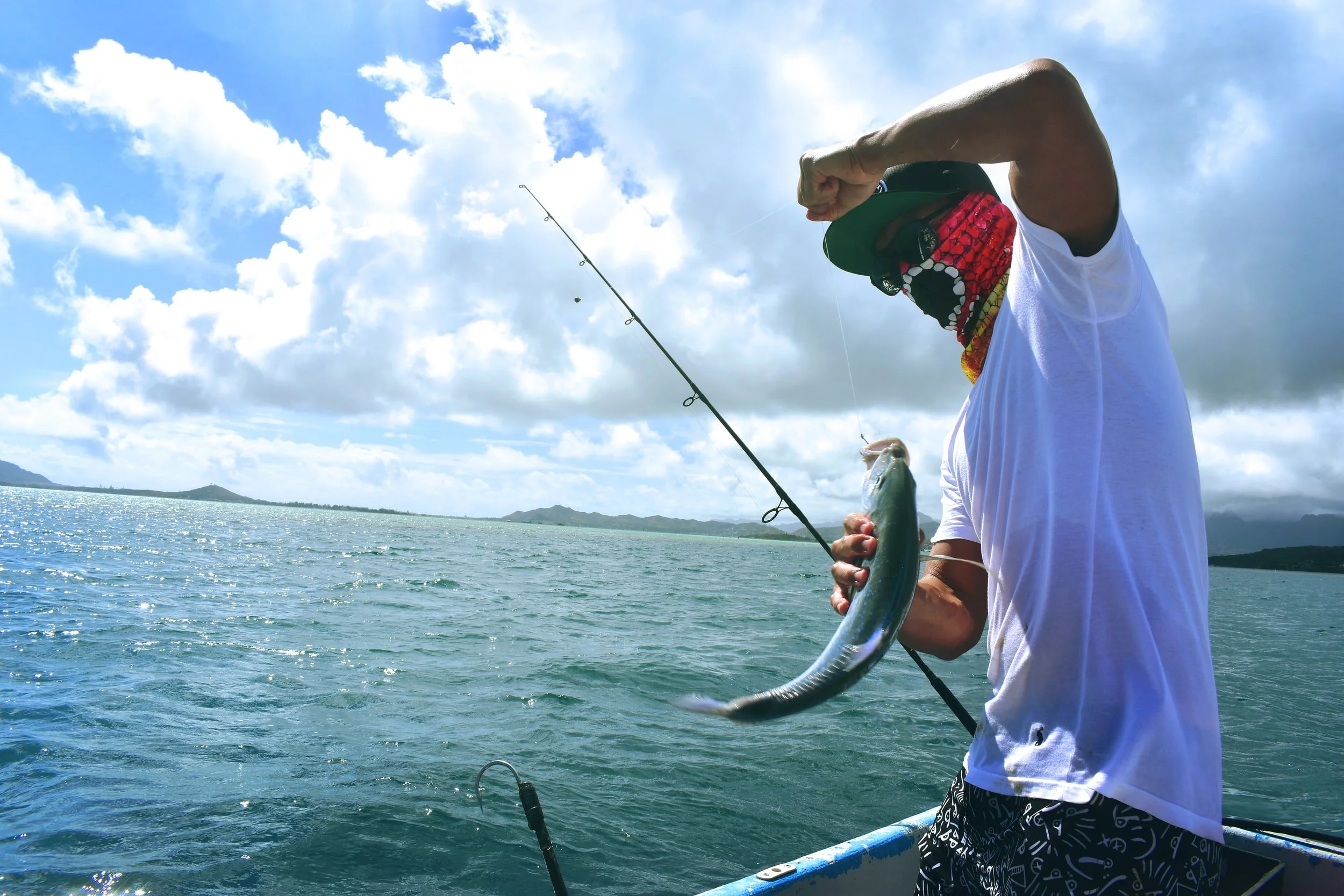
Last summer, a neighbor stopped by my garage, which looks more like a tackle shop than a place to park my car. I’m usually there tying bucktails or making fluke rigs. He was not a fisherman, and he was planning to take his grandson bluegill fishing at a local lake. He had no idea how to tie on a hook securely. When I showed him my book with 39 different knots, he said maybe he should take his grandson to a movie.
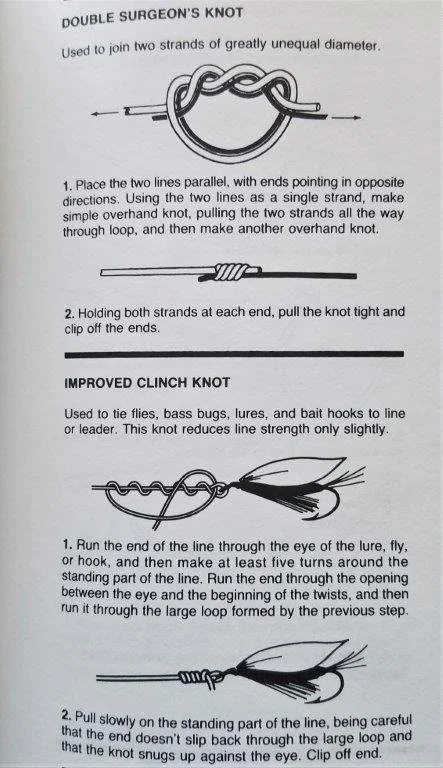
I told him he would have no problems. He has to learn to tie only two knots. I also told him that I had fished worldwide with these two basic knots. Sure I know how to tie a bunch of fancy knots, but these two knots are easy and simple to tie...even in a sloppy ocean or in a river when you’re trying to keep your balance. They are the Improved Clinch and the Double Surgeon’s Knot.
The Improved Clinch, illustrated here, is simple and the one I use exclusively to tie on hooks, swivels, and all lures, including flies. Make sure you snug the knot tight and leave a tiny tag end. I have spent 20 winters fishing in the Florida Keys on fishing charters and friends’ boats, and the Improved Clinch is the only knot we used to tie on hooks and lures quickly. Some mates double the line when tying this knot, but I never even found this necessary. With enough practice, you can tie it in the dark.The Double Surgeon’s Knot, also illustrated here, solves most of the other problems. It’s simple to tie and is used to join two strands of line even if the diameters are different. I use this exclusively to tie leaders to my line. It’s simply two overhand knots. Make it four or five overhand knots if you use a braided line. I’ve been using this knot for years, and it hasn’t failed me yet. Just make sure your wraps are neat and in line. A sloppy tied knot will reduce line strength. You can also use the Double Surgeon’s Knot to tie a loop at the end of your line.
Yes, I know there will be a bunch of fishermen and captains who will disagree and accuse me of being a sloppy knot tyer. They will swear by their Bimini Twists and those awful to tie blood knots when you’re wading midstream. Admittedly, if I’m fishing in a tournament, I will relent and let experienced mates tie those stronger knots. But when I’m alone or with friends, I will always stick with these two easy knots. I’ve had fish break my line, but never at the knot.
If you’re a fly fisherman, you might have to learn to tie one more knot. The Nail Knot to attach your leader to your fly line, but even Orvis has eliminated this problem with its neat splice kit to attach a loop to your fly line, creating a beautiful loop to loop system.
If you think tying all those fancy knots is fun, go for it. My book will show 39 knots to keep you busy. I want to keep my knots as simple as possible, especially when my close-up vision is not what it used to be. That’s it. Learn these two knots and go fishing!
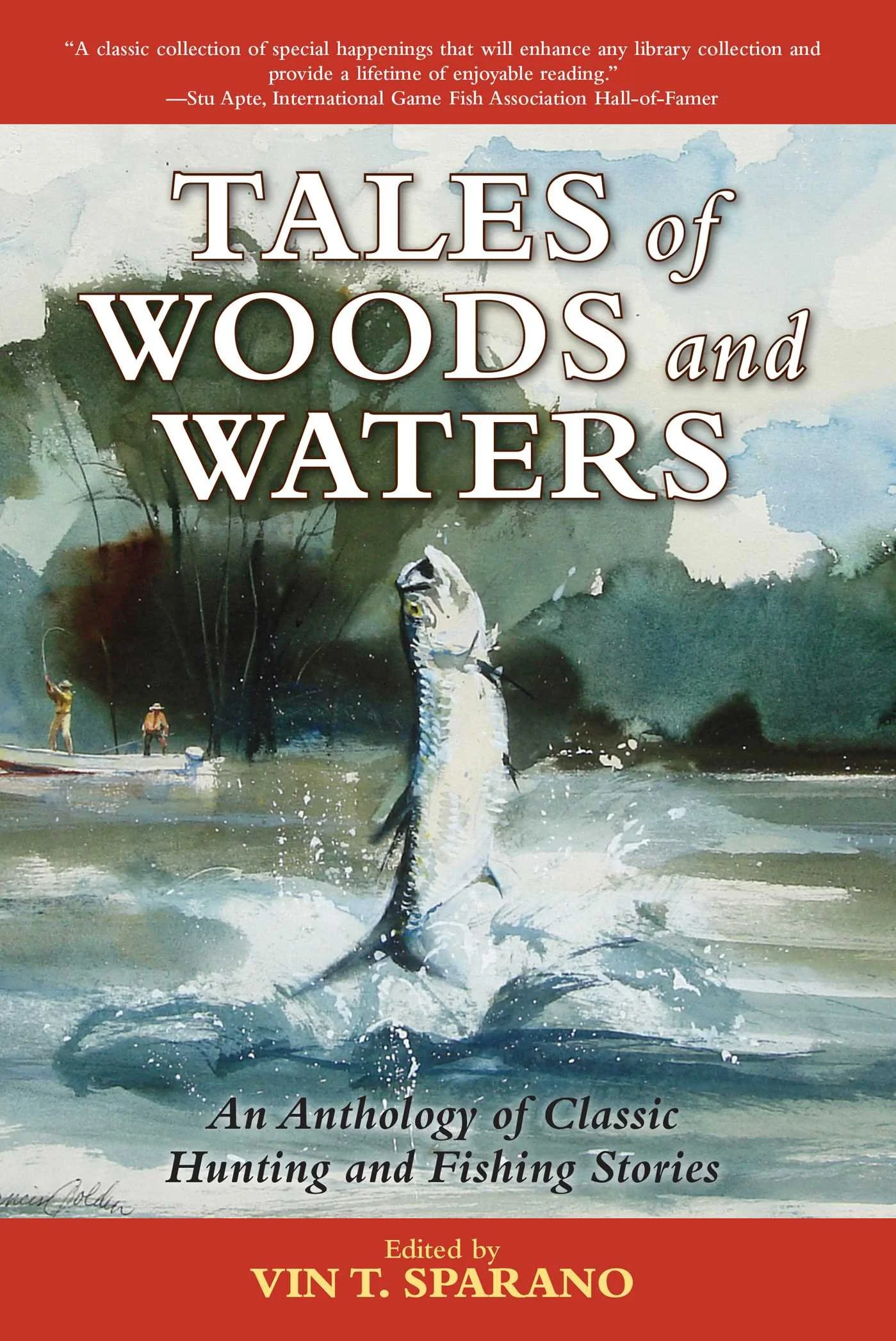
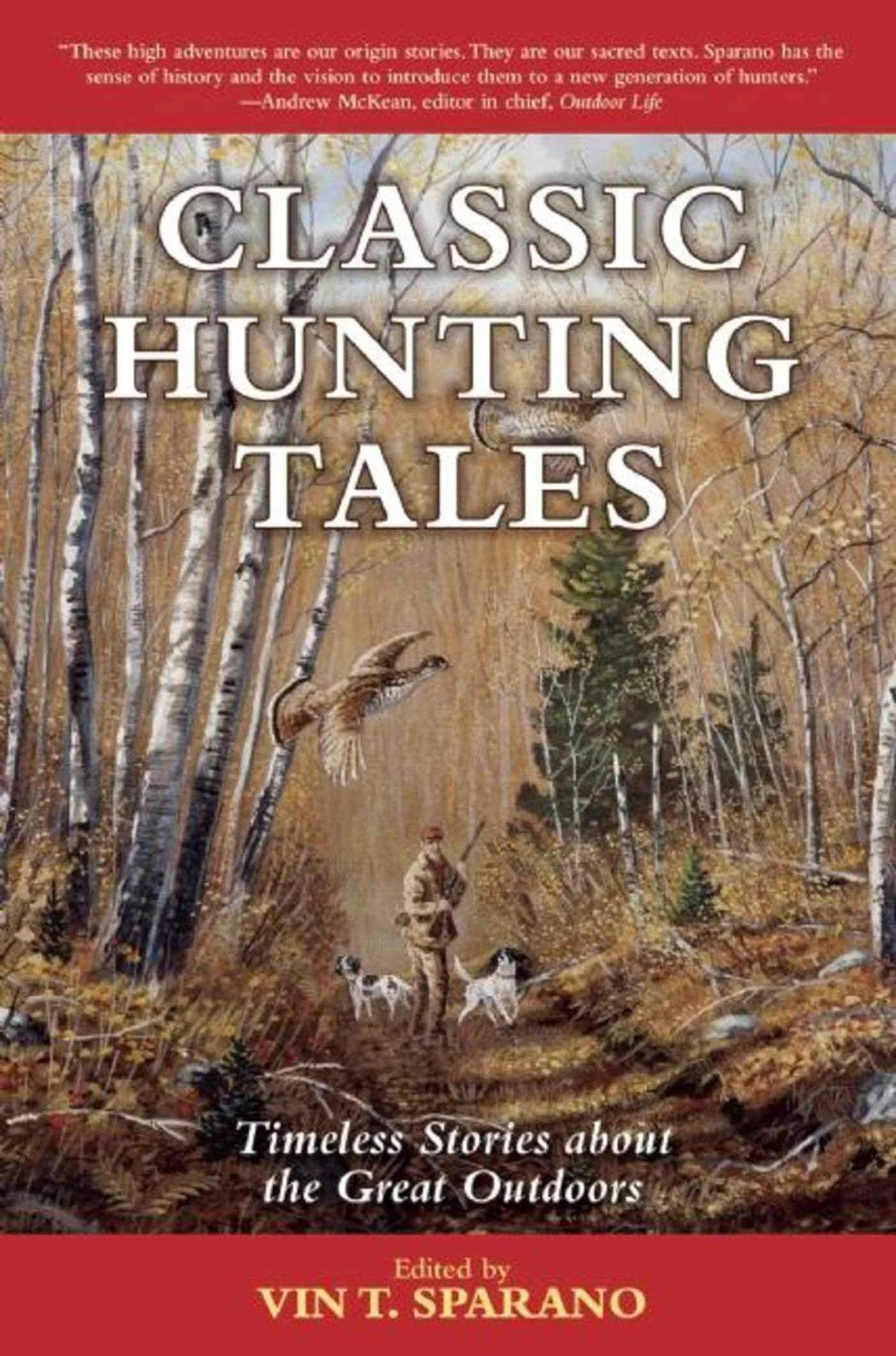
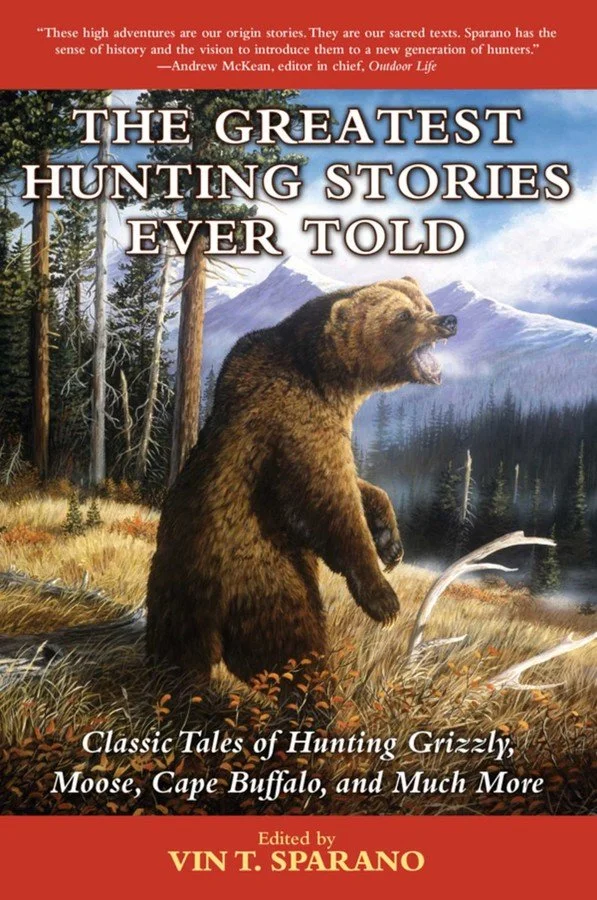
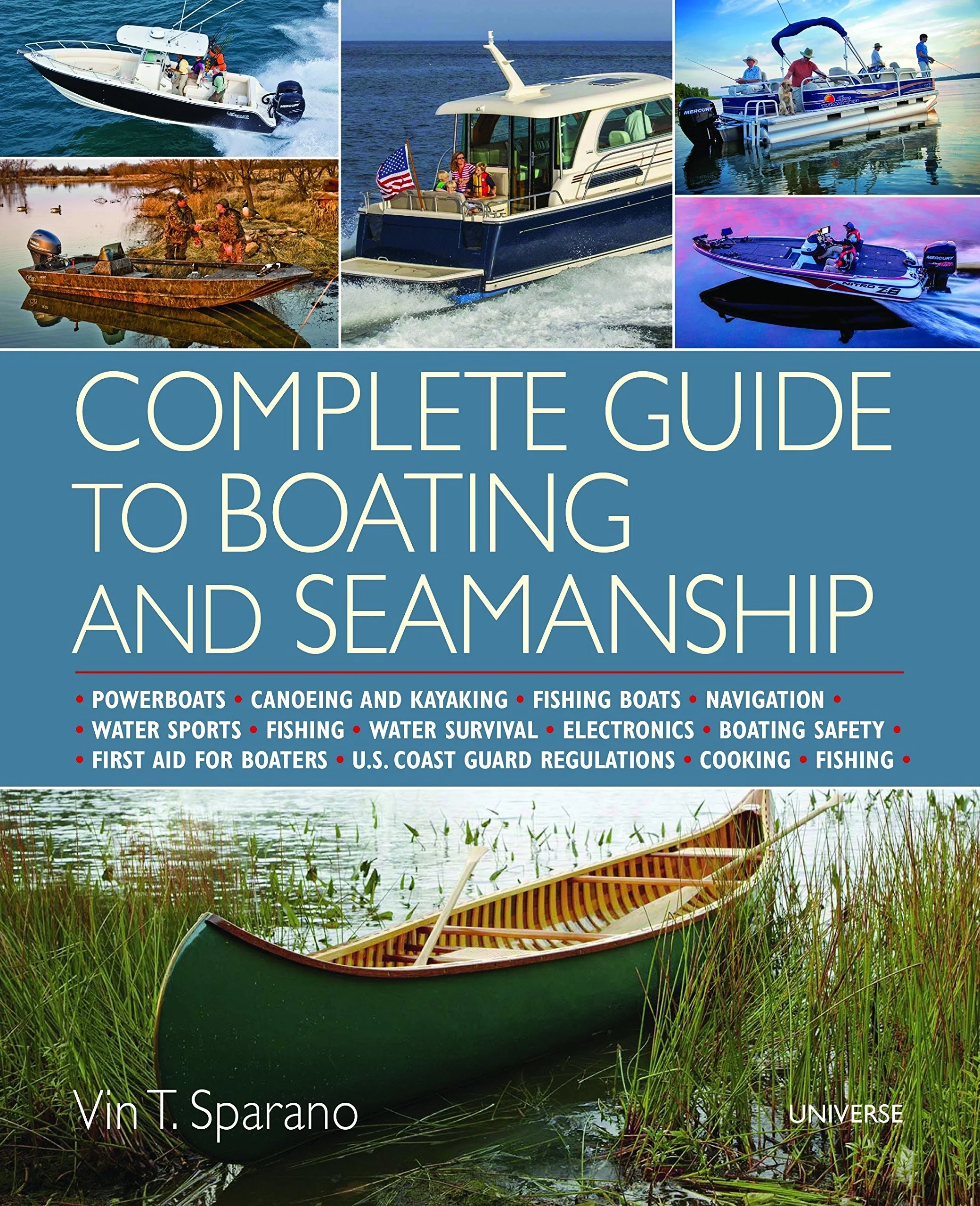
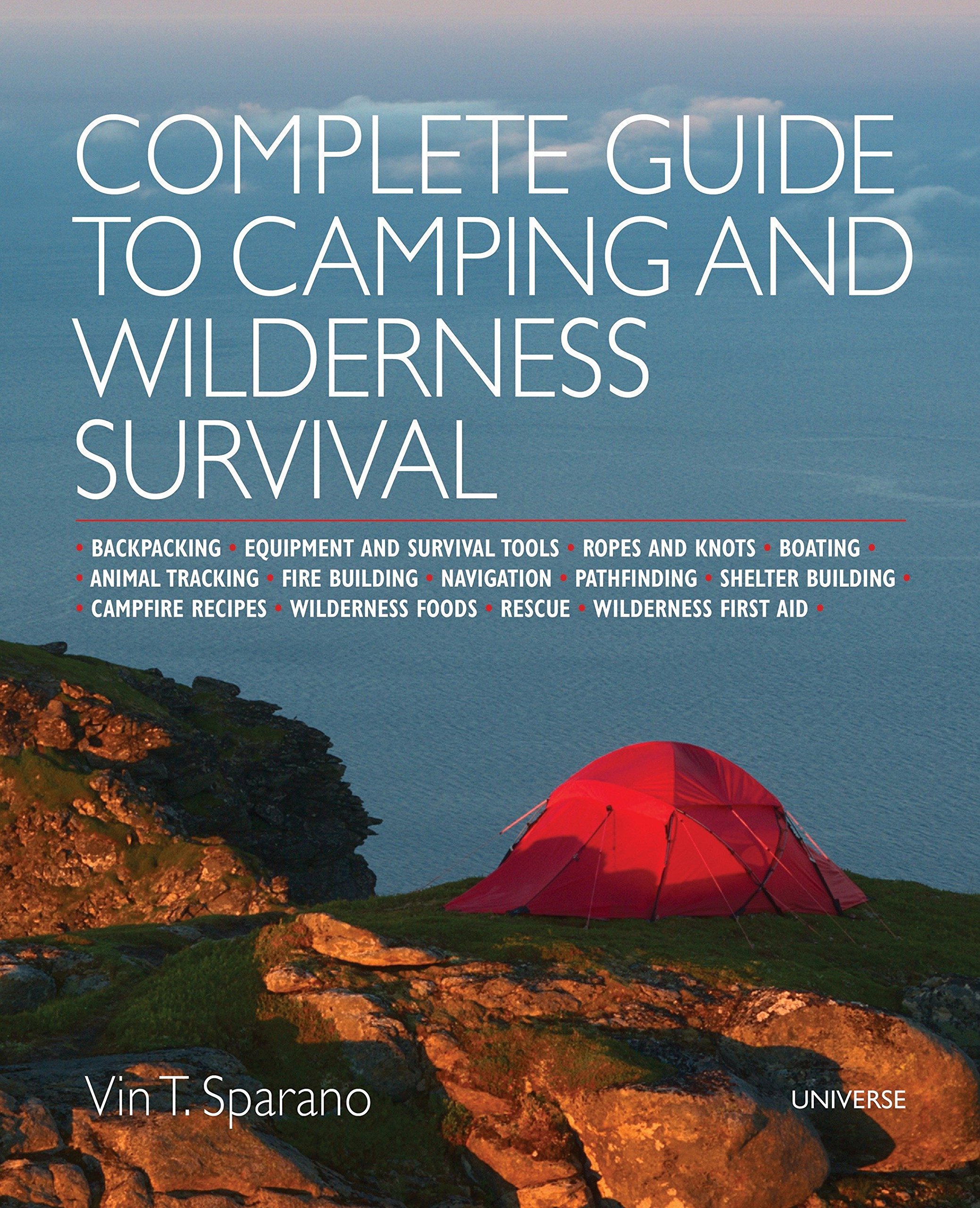
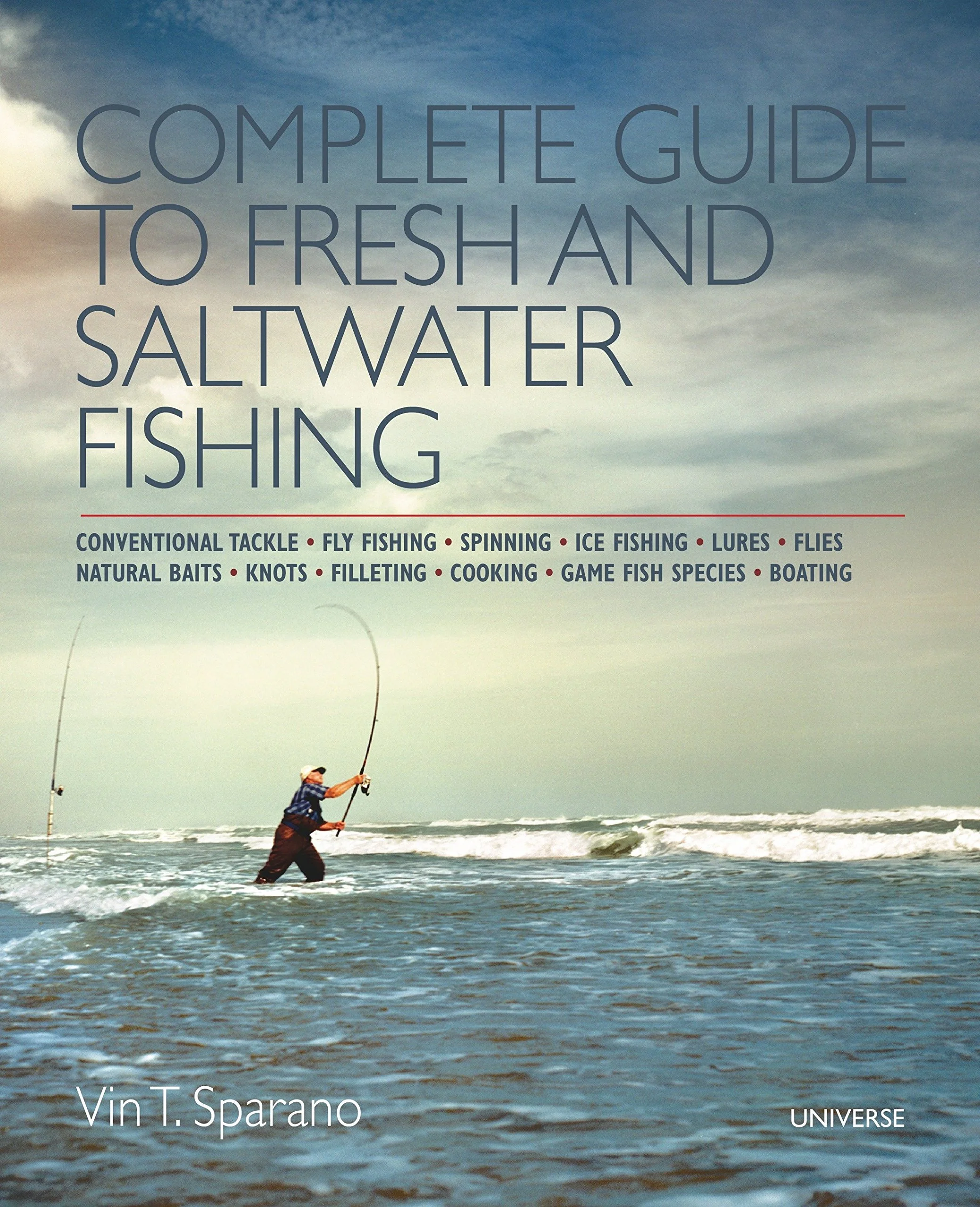
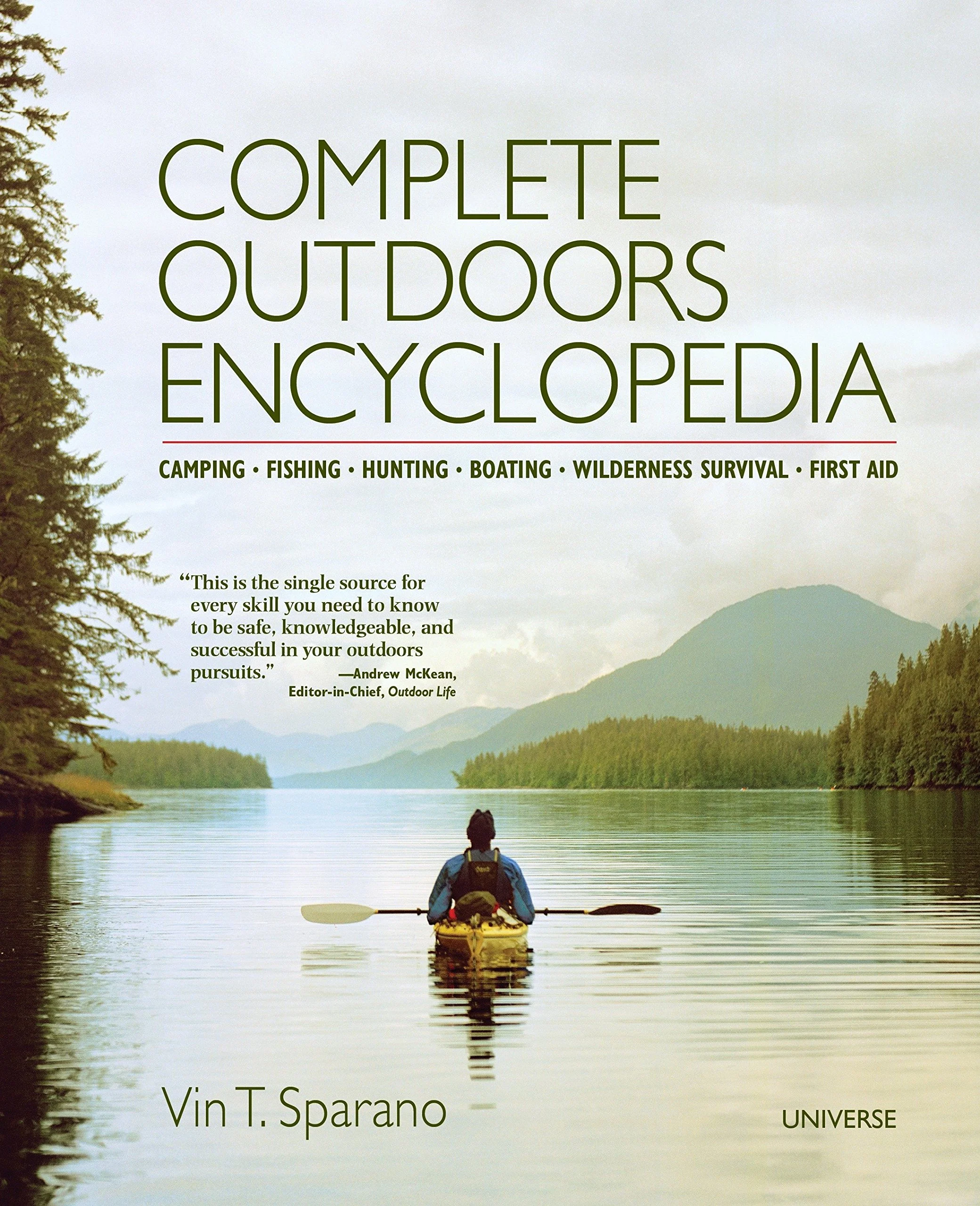
Check Out Vin T. Sparano’s Books

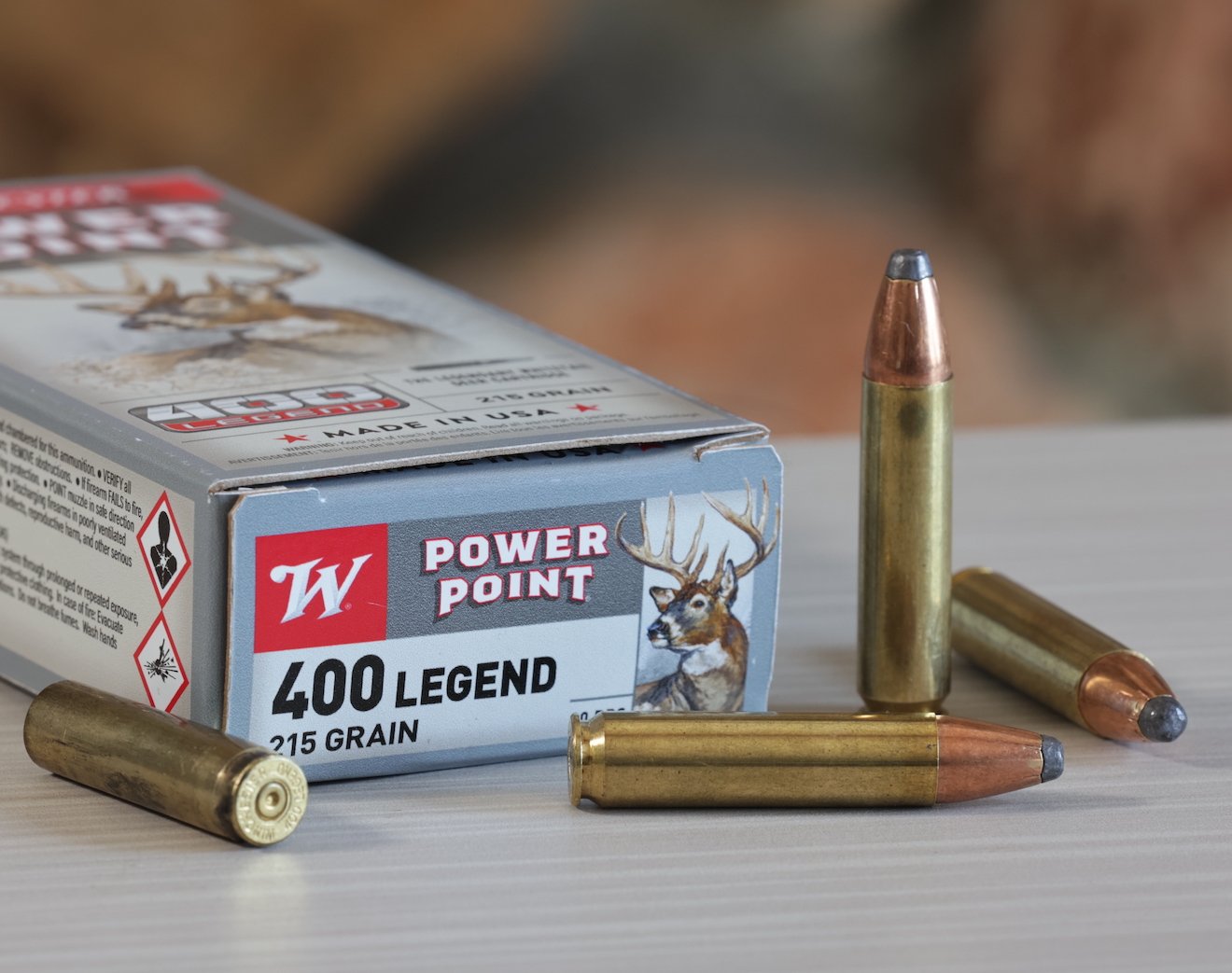
The new Winchester 400 Legend straight wall cartridge matches 30-30 Winchester performance but is legal in straight wall cartridge states.

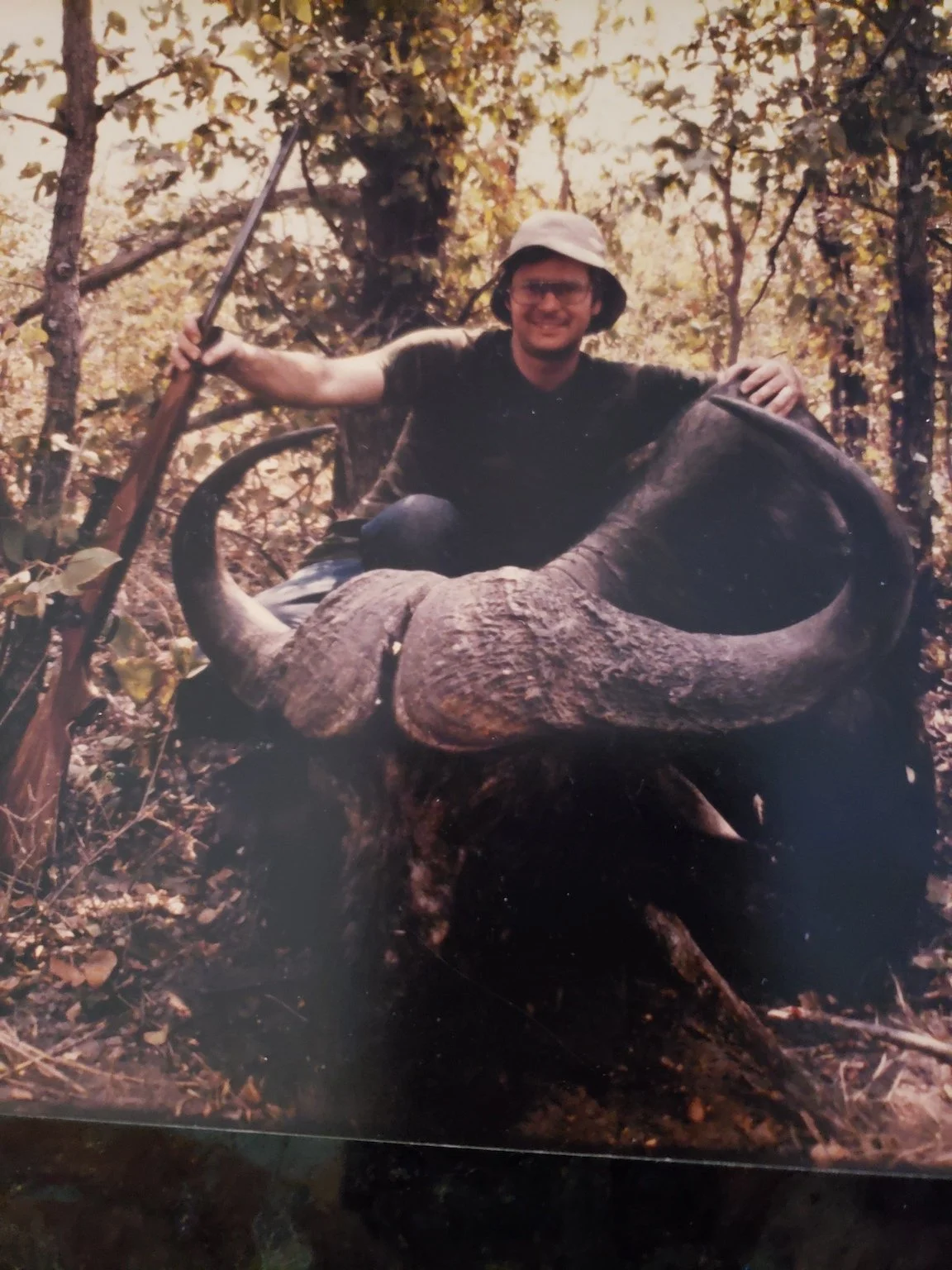
Stalking cape buffalo on the naked plains of Mozambique’s Zambezi Delta leads to food for local villagers and more wildlife across the hunting block.
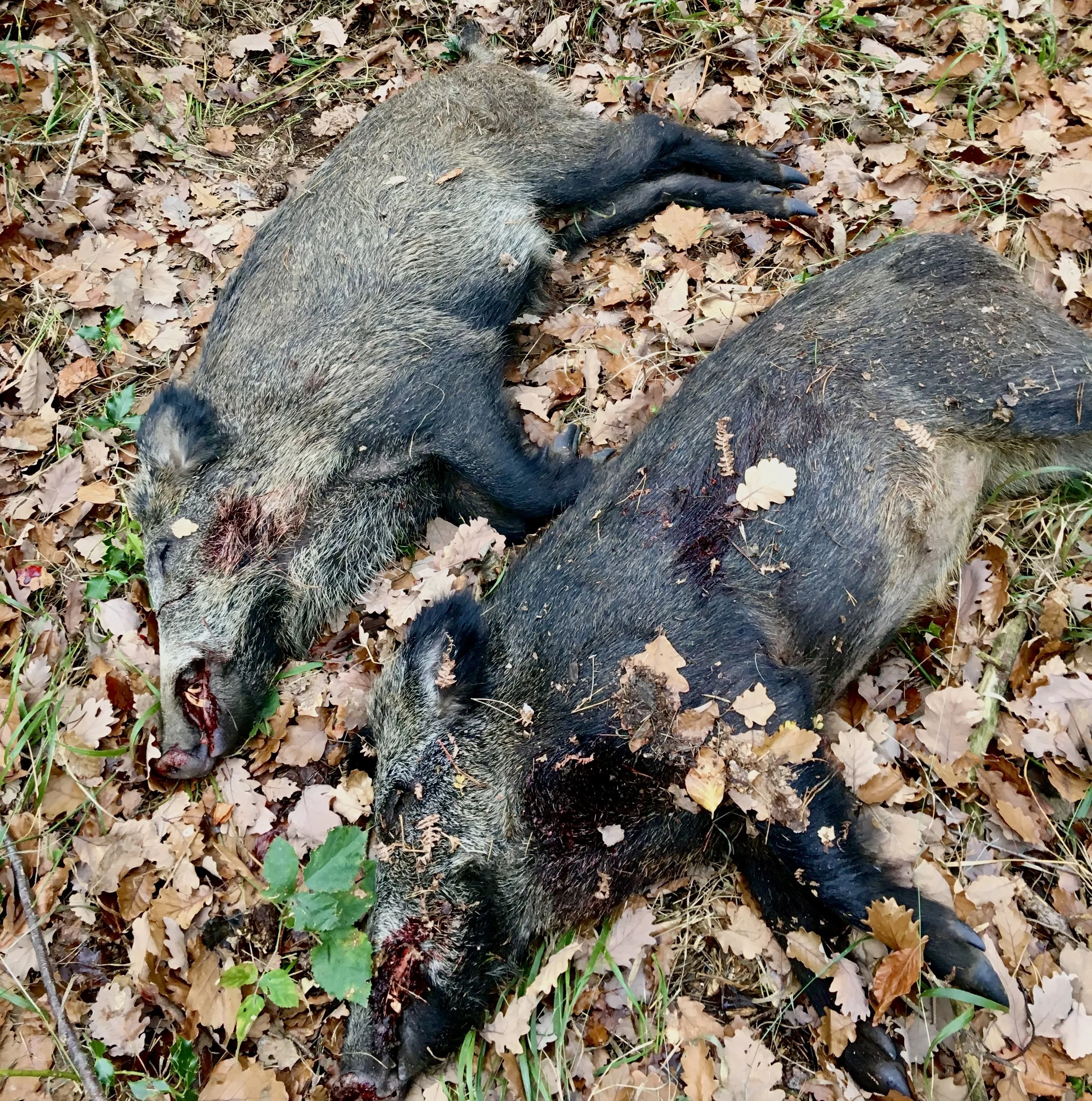
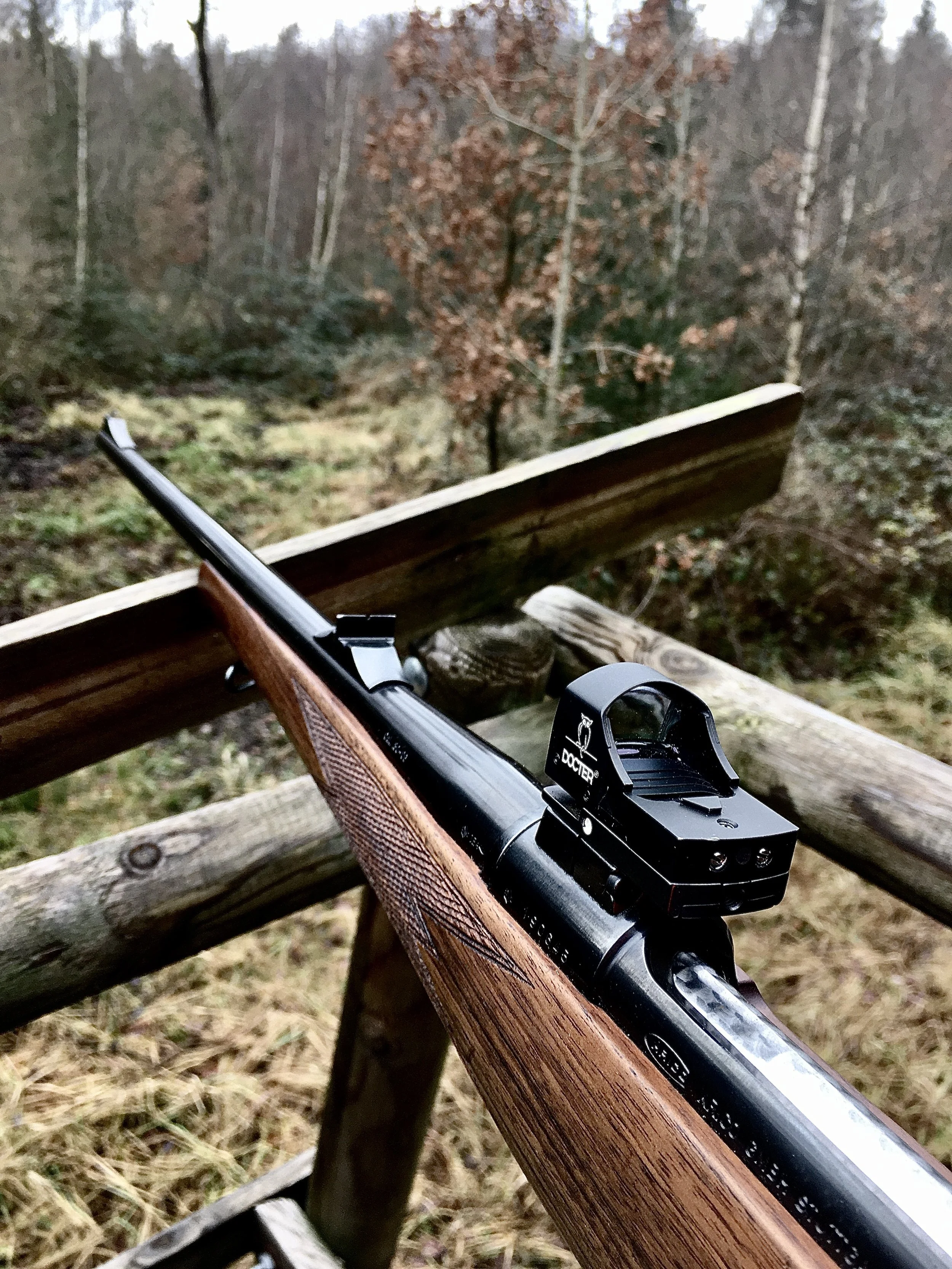
Being as stealthy as possible while moving through hunting grounds is essential. If you're still trying to hunt through potential bedding areas, closing in on game you spotted from afar, trying to sneak to your tree stand for a sit, or you're tracking bucks as they do in New England, every noise you make is too much.
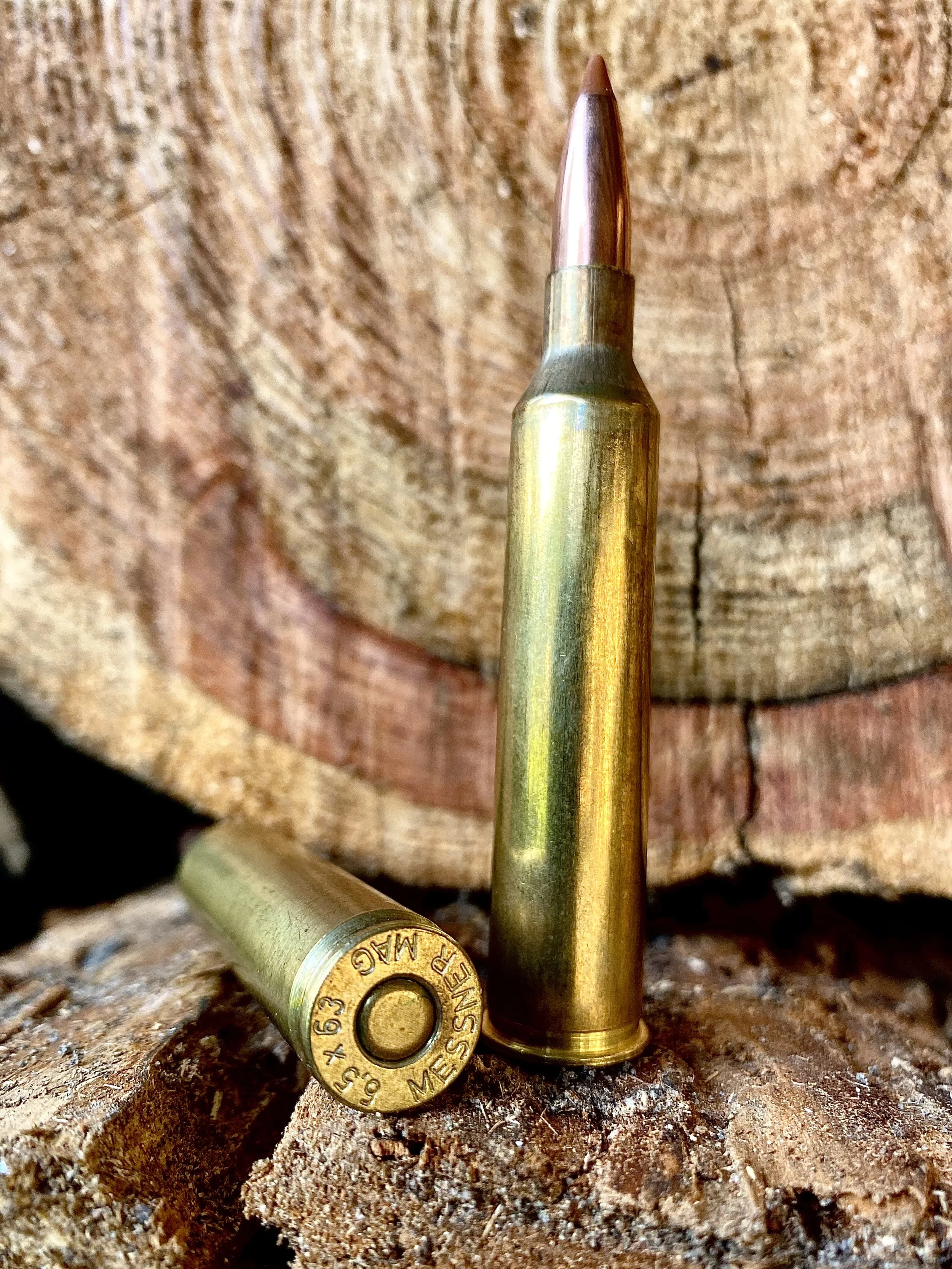
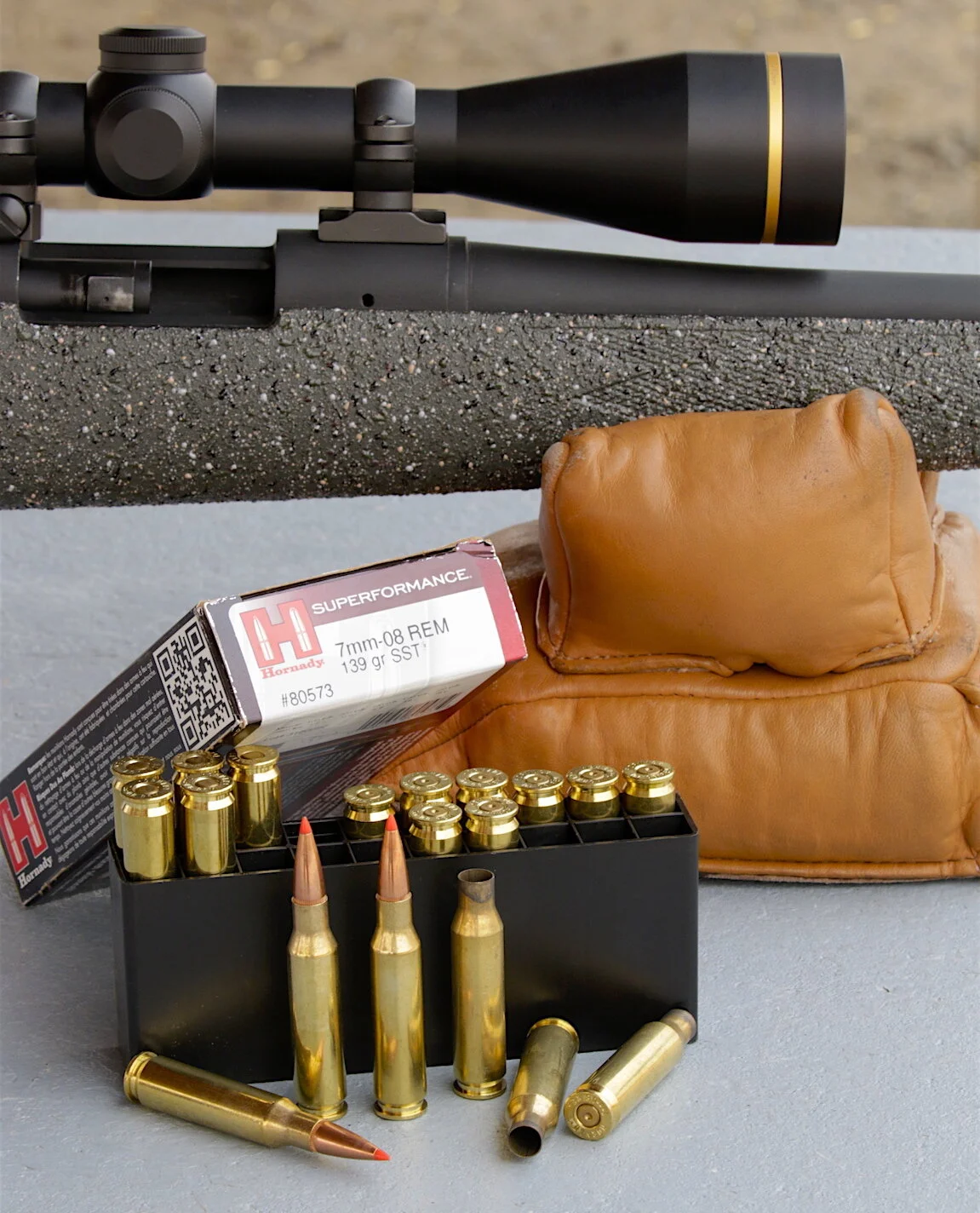
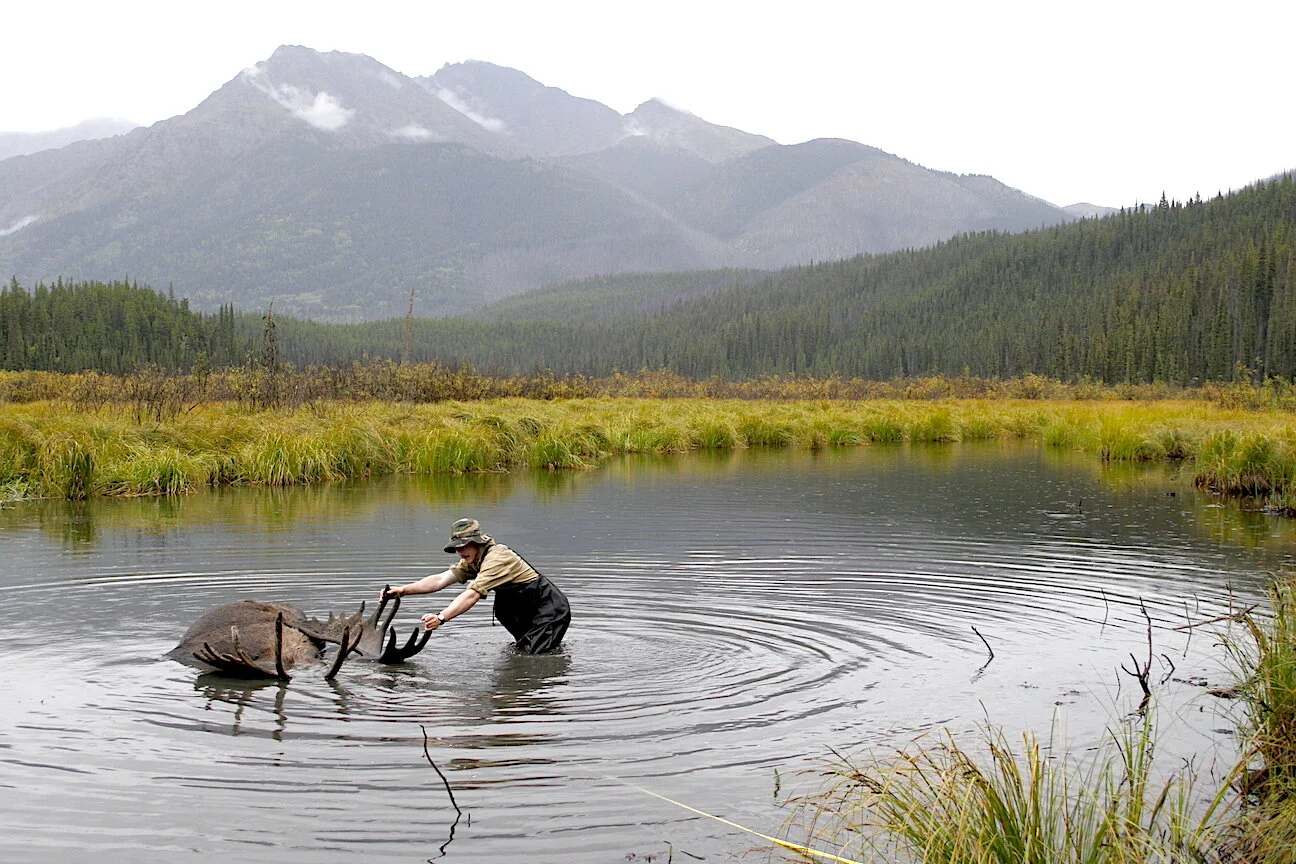
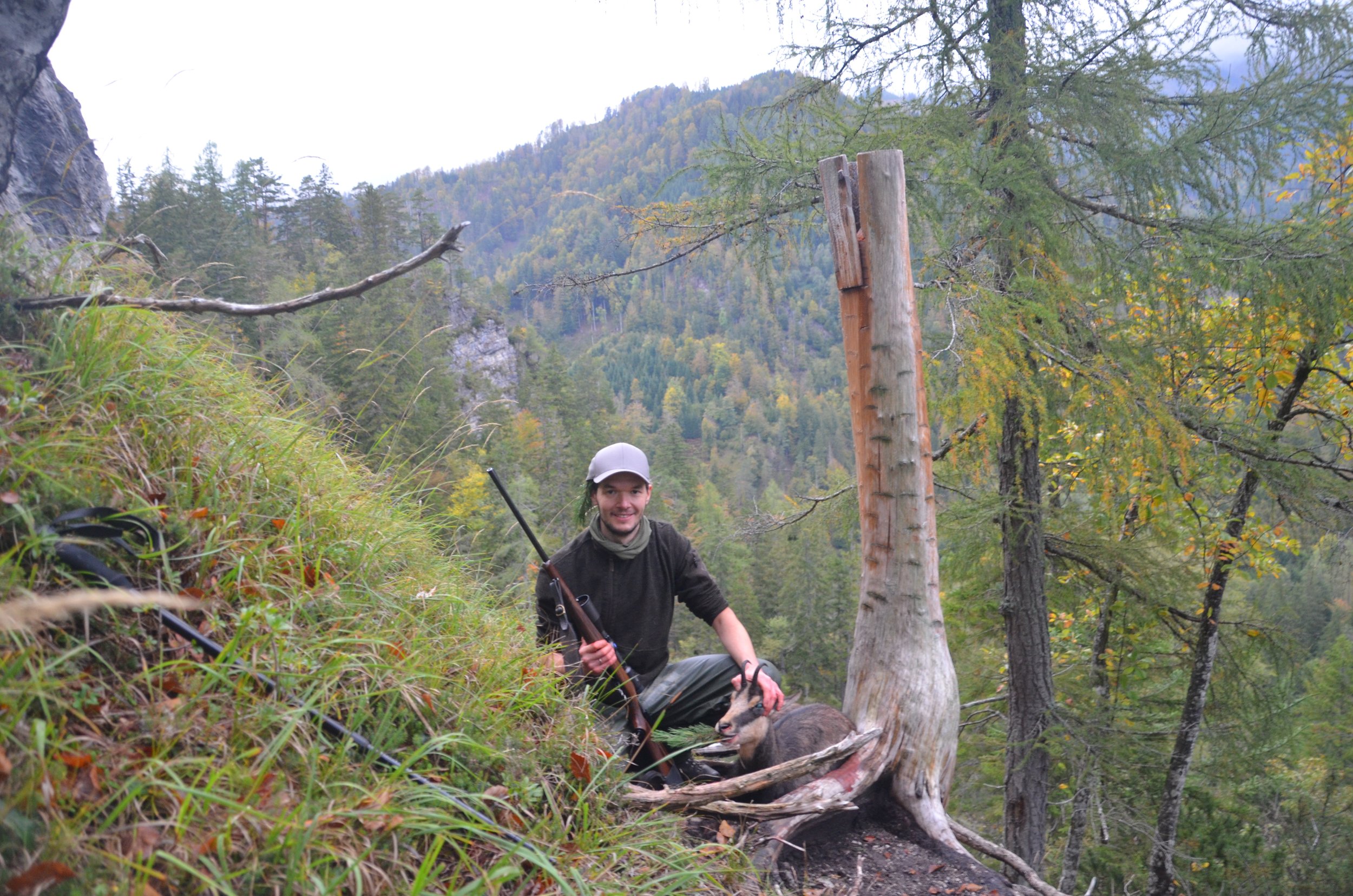

They start from the base, rising with bumps, bruises, and little rings. At last, they turn back, bending to form a bow. With their thick bases, a pair of them sits atop a white face with dark, lengthwise stripes. Every European mountain hunter dreams of this trophy -- the horns of a chamois.


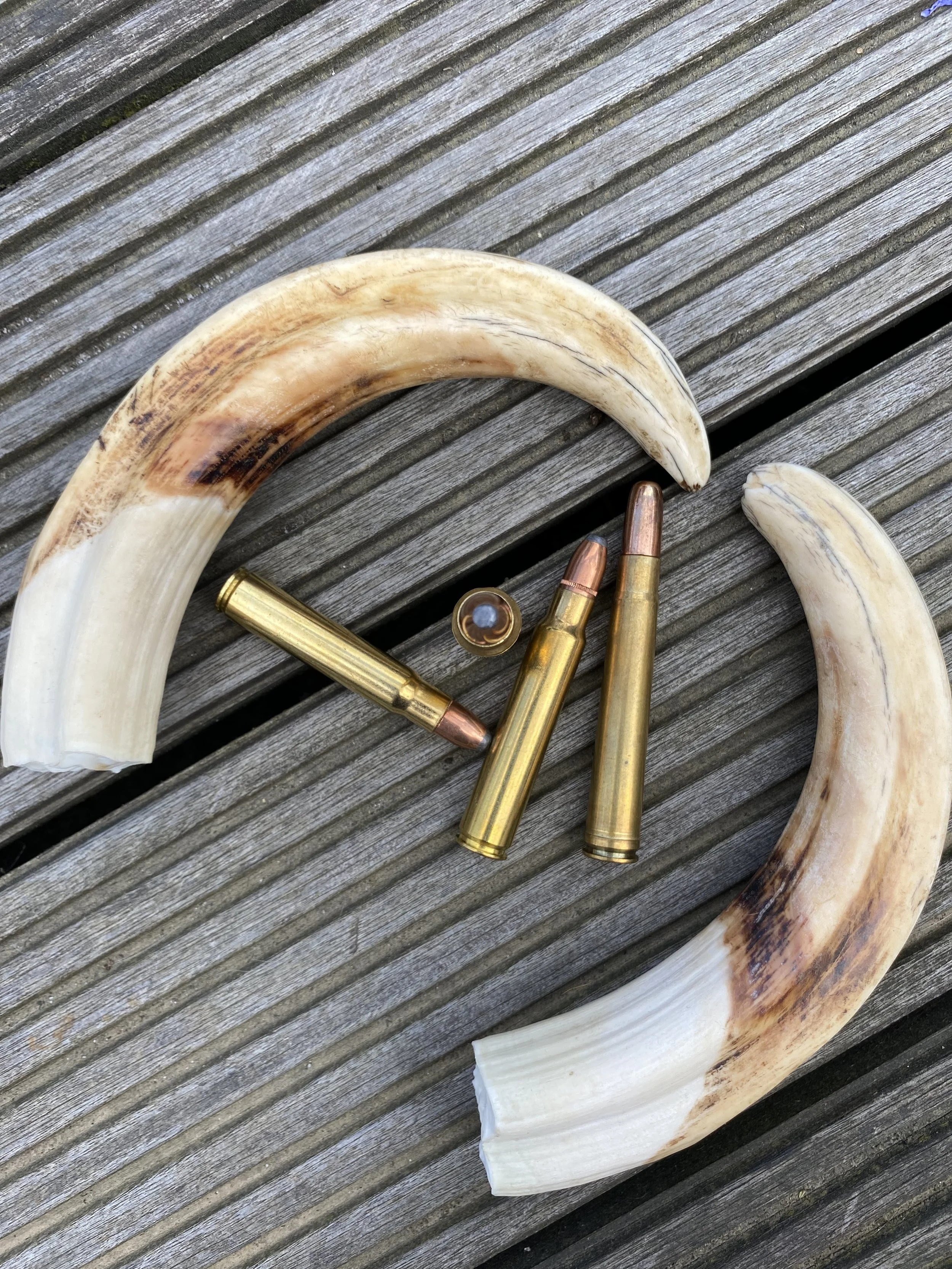
If the average American hunter heads out for a big game hunt, chances are he’s relying on the .30-06 Springfield to get some meat on the ground. Why? Well, because the ought-six has proven time and time again that it gets the job done -- reliably and repeatedly.
If his European counterpart picks his do-it-all rifle, he’ll choose the 8mm Mauser rifle every time.
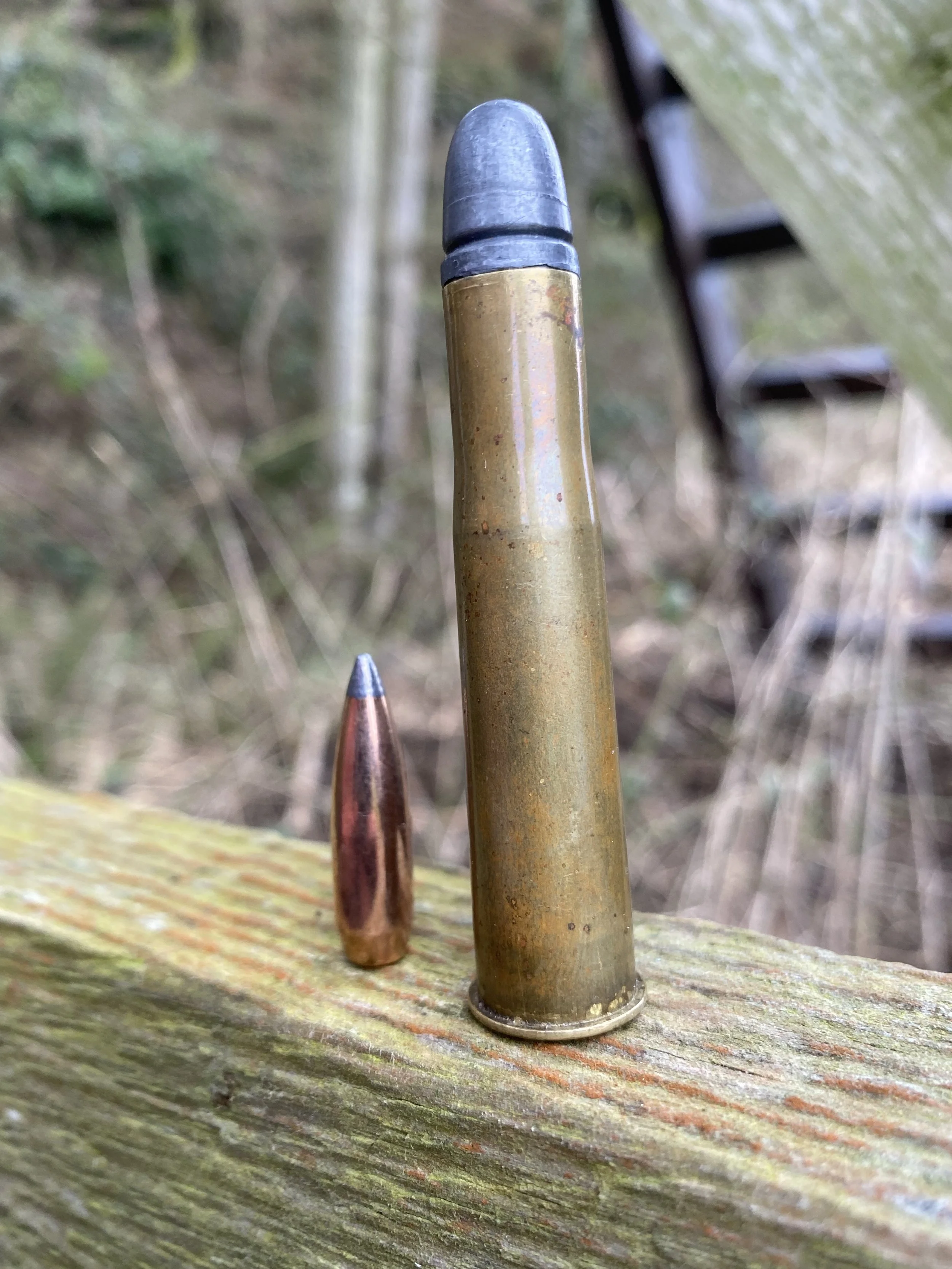
Since its introduction in 1912, the venerable .375 Holland & Holland has been the benchmark for all medium-bore cartridges. Its caliber is the minimum for dangerous game hunting in many African jurisdictions, and with adequate bullets, it’s a sensible choice even for elephant hunting.

Zeroing a traditional 30-30 load at 160-yards maximizes point blank range, but a 50-yard zero might be more effective in tight cover where shots are no farther than 120 yards. Sight-in high at 100 yards for most versatility.
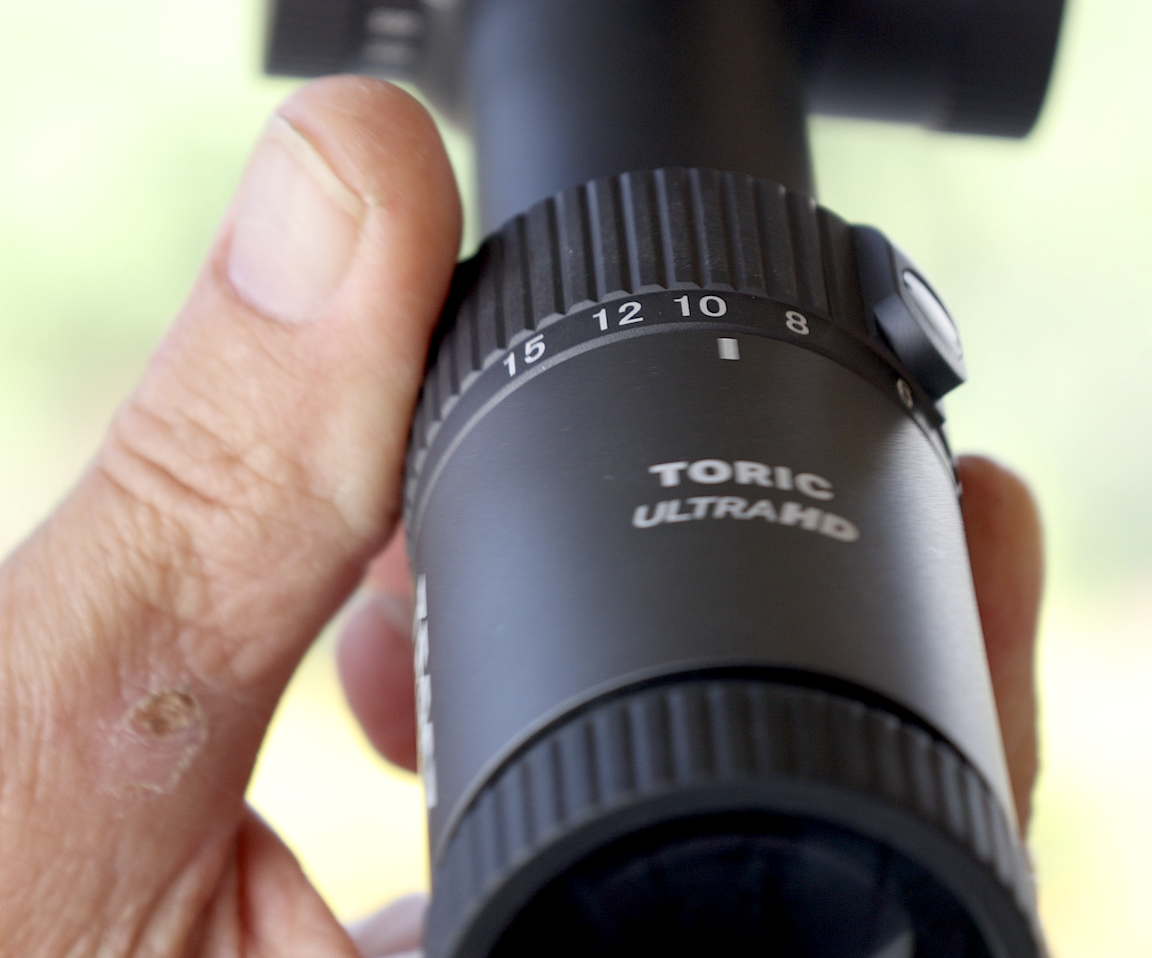
Tract Toric Ultra HD 2.5-15x44 FFP MOA scope earns 5 Stars. Sharp, bright, high contrast, precise, repeatable.


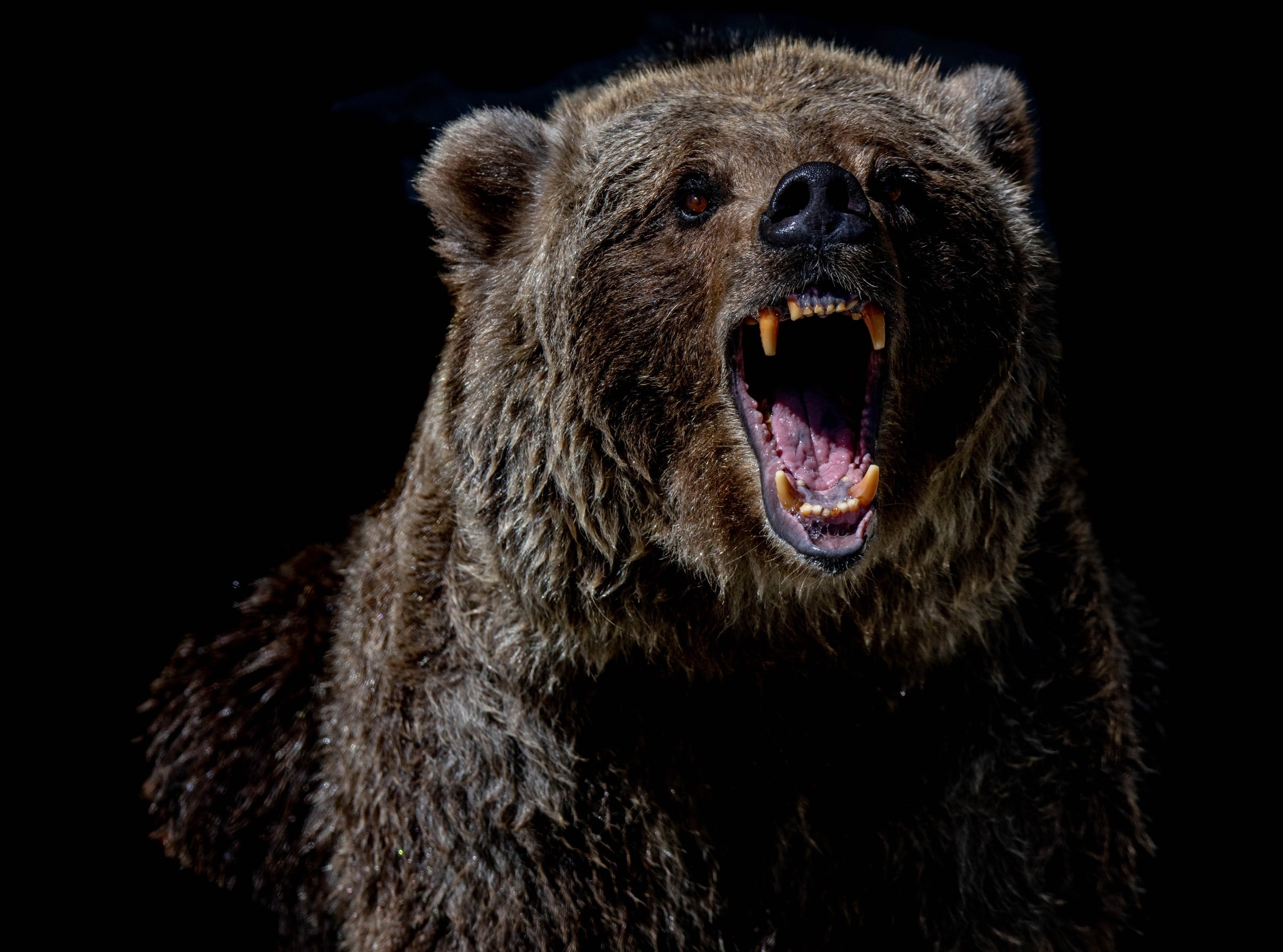
“Find me a good flapping scalp story,” I’d say to the Outdoor Life editors at many of our staff meetings. I meant, of course, a good bear tale where a grizzly or Alaska brown bear got the upper hand and chewed off the hunter’s scalp. During my tenure at Outdoor Life, I learned very quickly that our readers had a true love affair with bears, especially rogue grizzlies.
Baffin Island in the Northwest Territories can be downright mean to hunters. It’s cold, windy, and wet. Campfires are a luxury on Baffin. There are no trees, and the only vegetation is lichen and moss. The shoreline is a maze of ankle-twisting rocks. But the caribou hunting more than made up for the aches and pains in my body when I hunted there years ago.

Unfortunately, the recent black bear attack in northern New Jersey and the first fatal bear attack in about 150 years is an example of what happens when people panic and run scared. Perhaps this deadly attack might not have happened if the young hiker had been more knowledgeable about the dangers of encountering a wild animal.
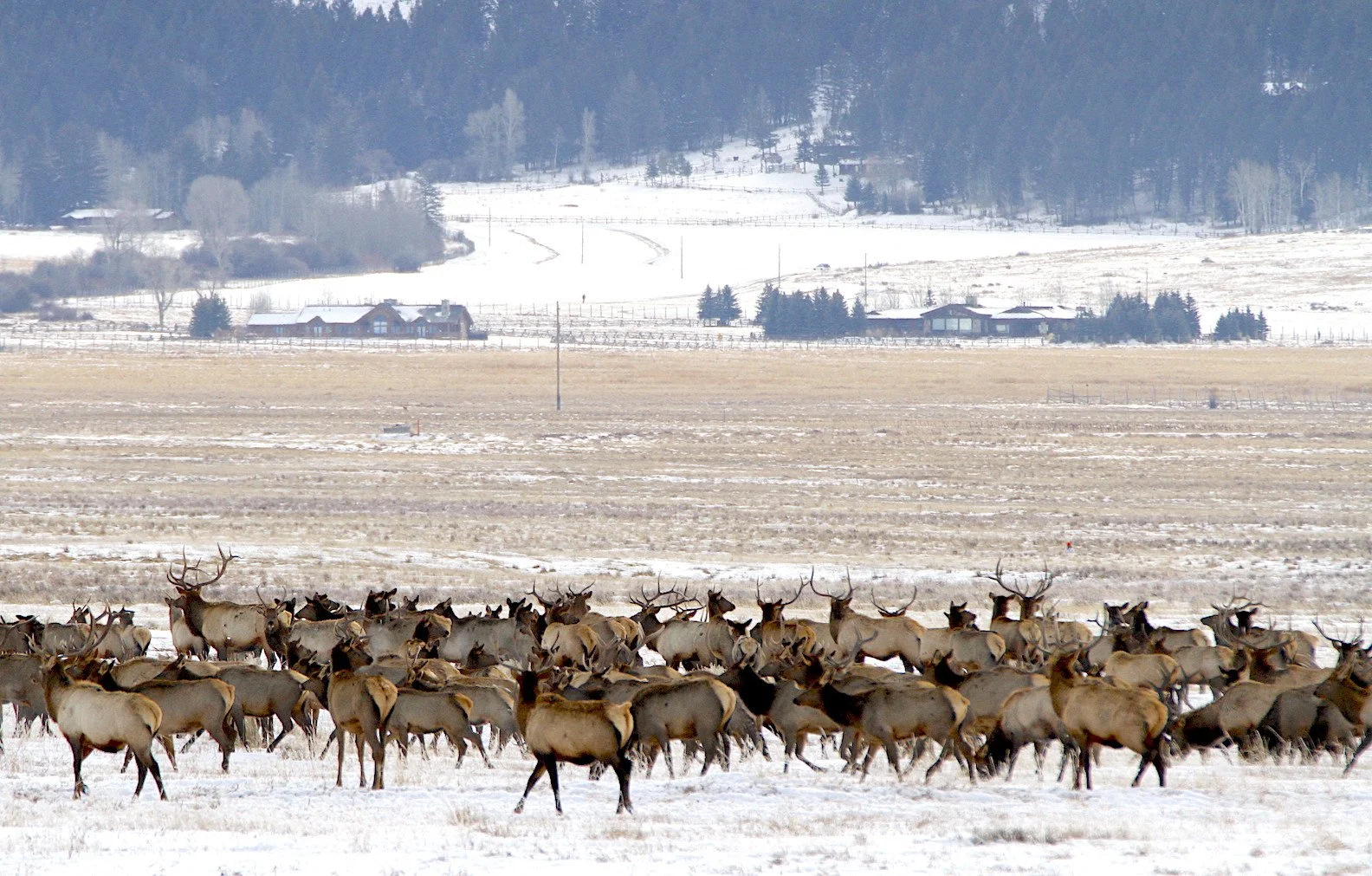
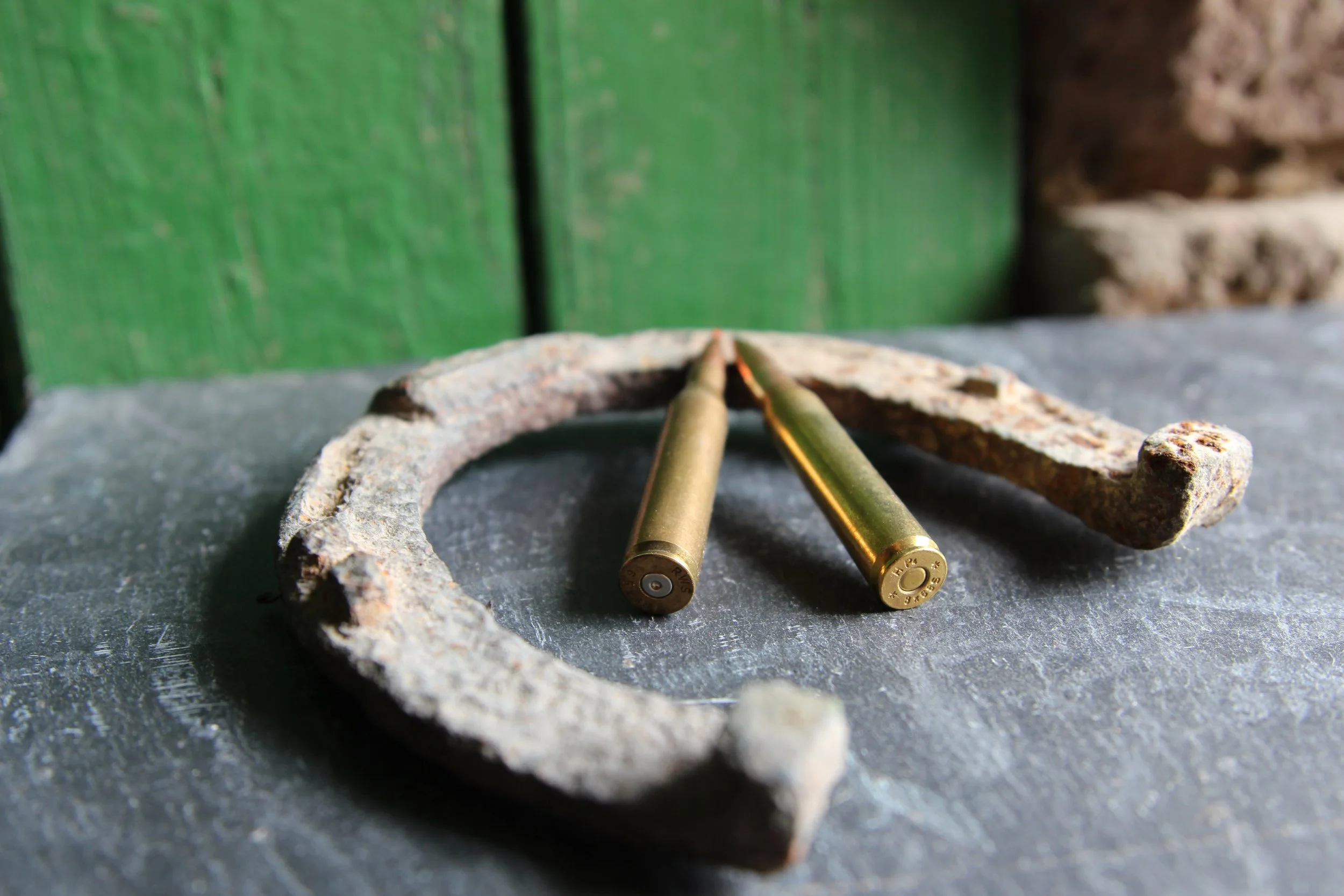

“This was not the way it was supposed to happen. I hit the Cape buffalo squarely in the chest with a .375 Holland & Holland, a cartridge the size of a banana. Nyati was supposed to go down. He didn’t even flinch! In fact, the bull trotted off with his buddies.
 Vin T. Sparano
Vin T. Sparano worked at Outdoor Life magazine for over forty years, serving as both the Editor-in-chief and Senior Field Editor. There, he compiled Complete Outdoors Encyclopedia, which won multiple awards including the Library Association’s Award for Outstanding Reference Work. He has also written and compiled over a dozen other books including The Complete Guide to Camping and Wilderness Survival and Tales of Woods and Waters, as well as hundreds of articles on the subject. He has dedicated his life to the outdoors and is one of the most-respected authorities in the field. He lives in Port Monmouth, NJ.
Purchase Vin T. Sparano’s books here: https://amzn.to/3LDGwxf