

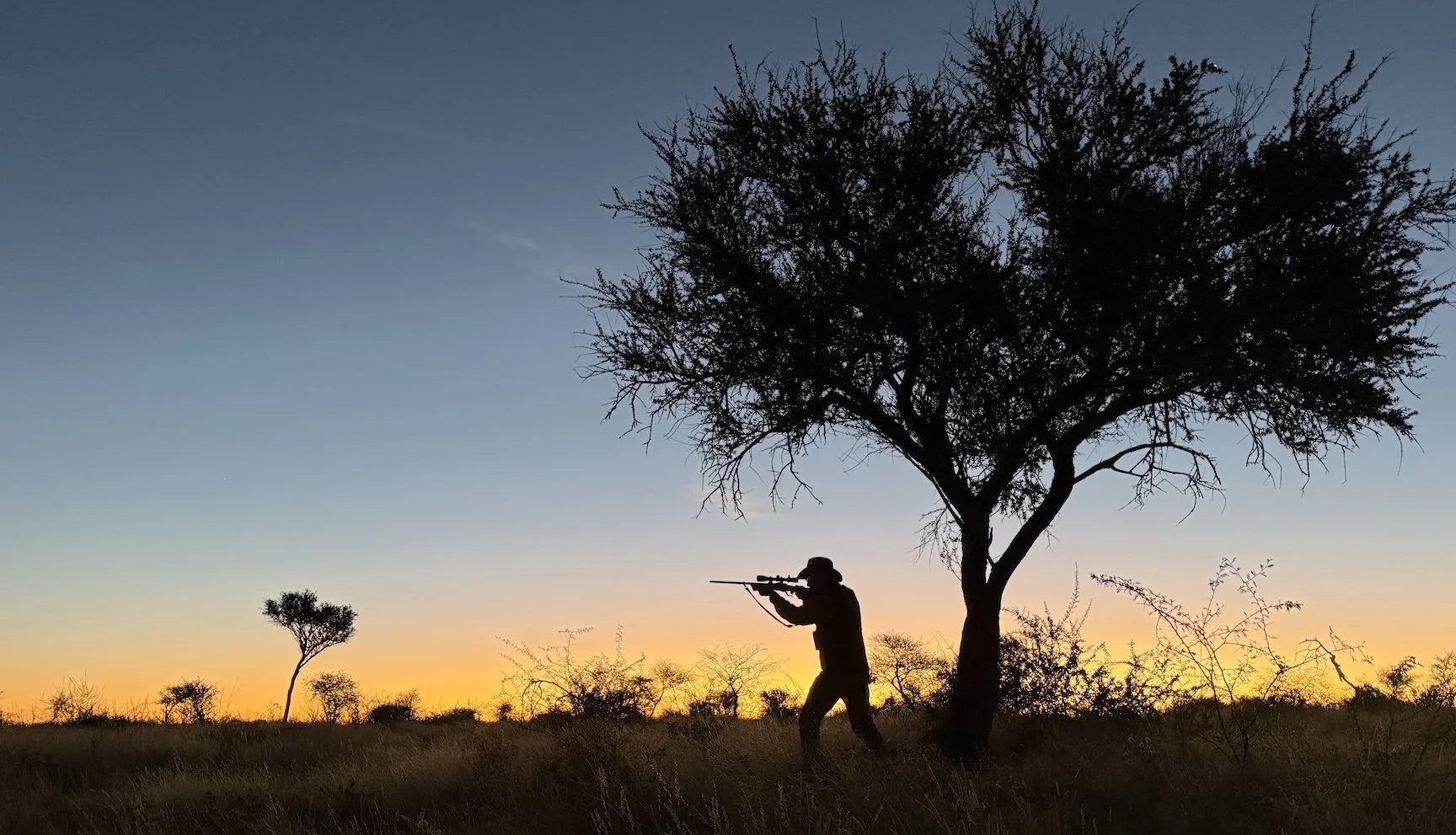
The general consensus among hunters is that African game -- everyday antelope species as well as the bigger stuff -- is tougher than North American game and requires heavier, “harder hitting” cartridges and bullets. Think 300 magnums, 338 Win. Mag., 375 H&H Magnum, and larger.
By the same measure, heavy-for-caliber bullets are recommended. Why? Because throughout the 20th century they were proven to work.
But that was then and this is now. Modern bullets have changed the paradigm. After working extensively with all-copper bullet in Africa since 1995, I’ve formulated new opinions based on performance and observation, more of which we just compiled during two recent safaris in the central highlands of Namibia and the Eastern Cape of South Africa.
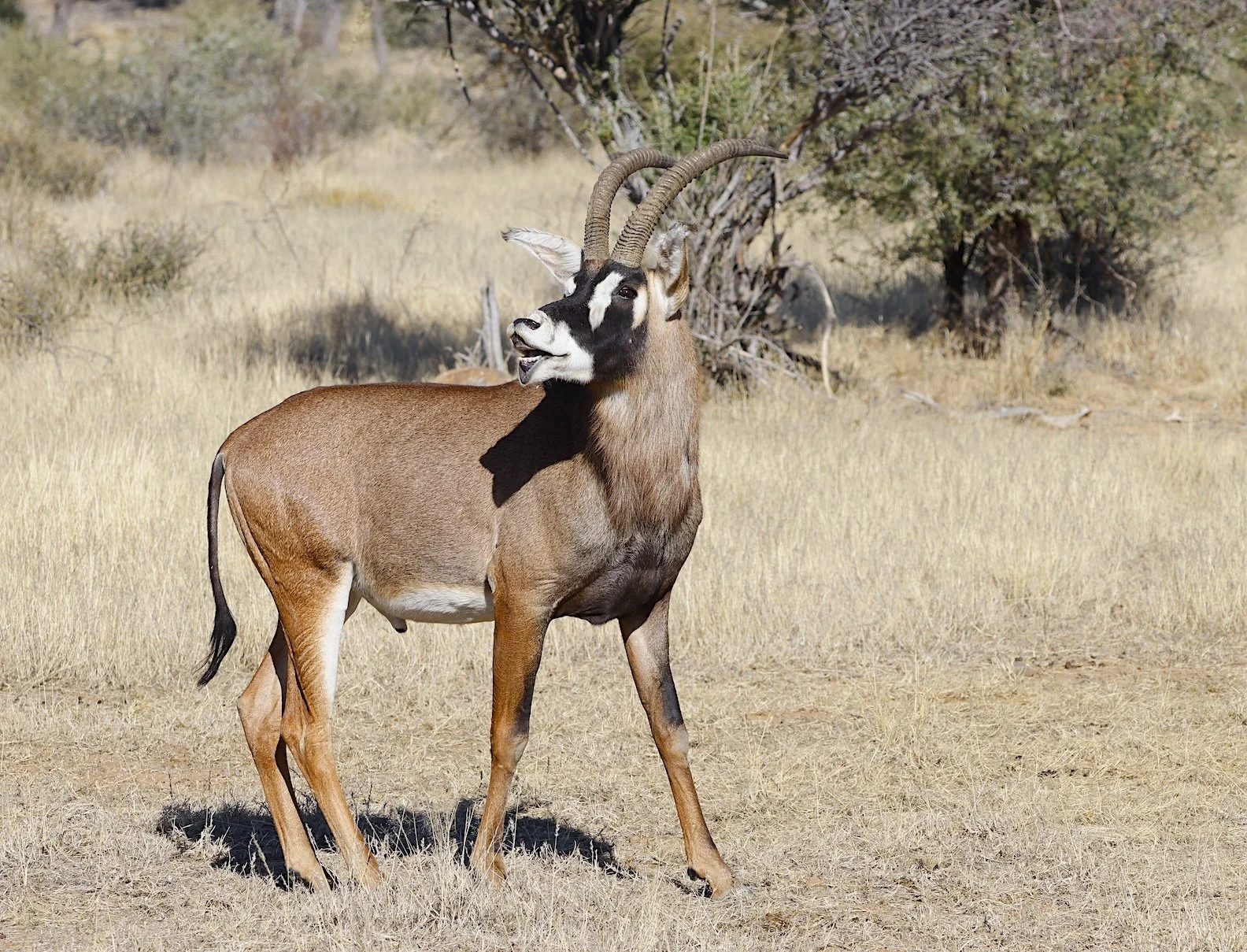
Bull roan antelope, third largest antelope in the world and famously difficult to bring down.
Five of our Patrons joined us for their first Africa hunts and had a joyous, productive time, but in this blog I want to focus on the results Betsy and I had with our “little” 7mm rifles and bullets.
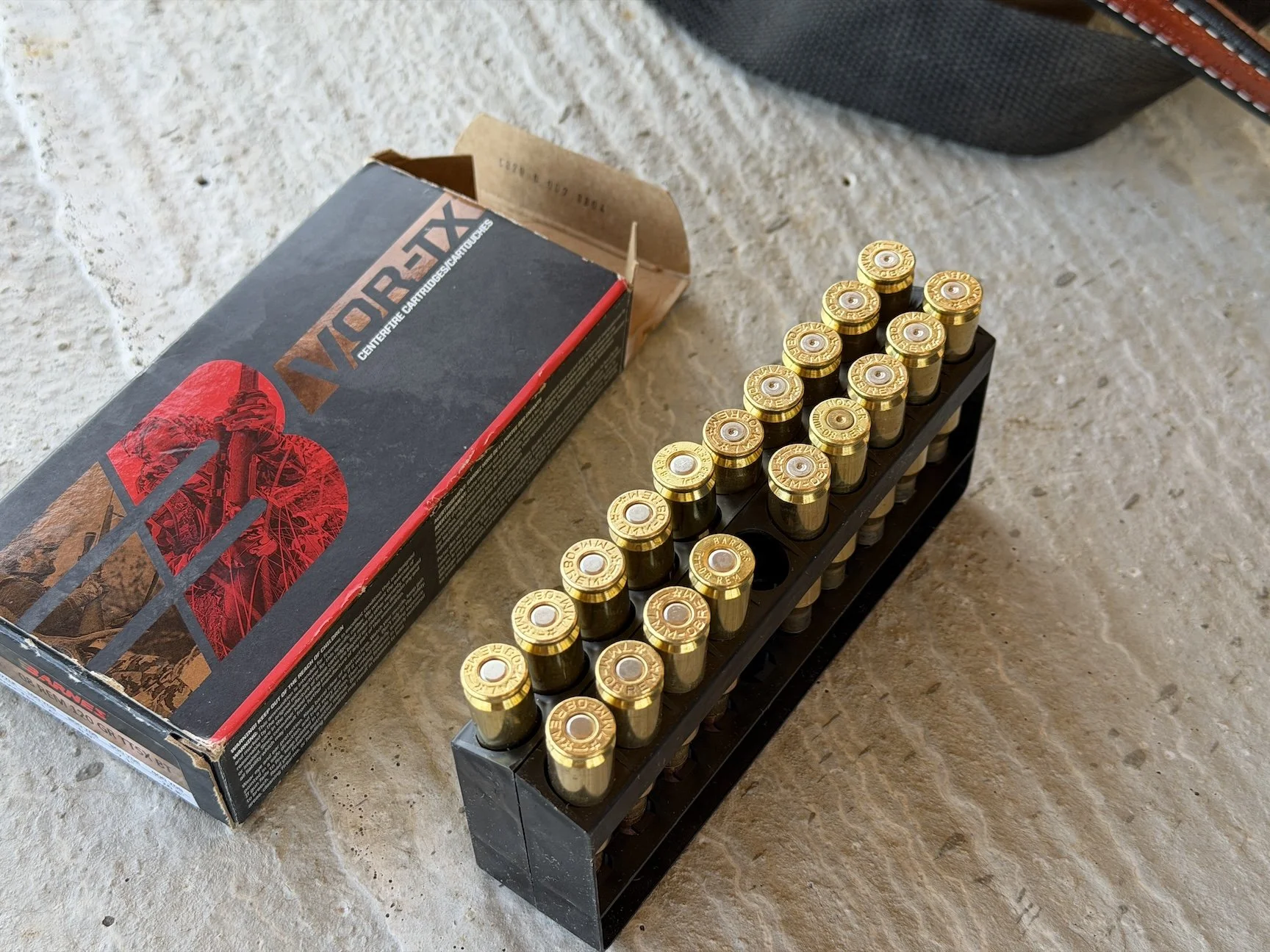
Betsy was shooting 7mm-08 Barnes Vor-TX factory ammo driving 120-gr. TTSX bullets about 2,800 fps from an 18” barreled Kimber Adirondack with Banish Backcountry 30 suppressor turning down the volume.
She put one bullet into the chest of an ancient eland cow quartering slightly away from about 270 yards. It just stood there. So she cranked up a second round and parked it in the chest, whereupon the 1,200-pound animal keeled over.
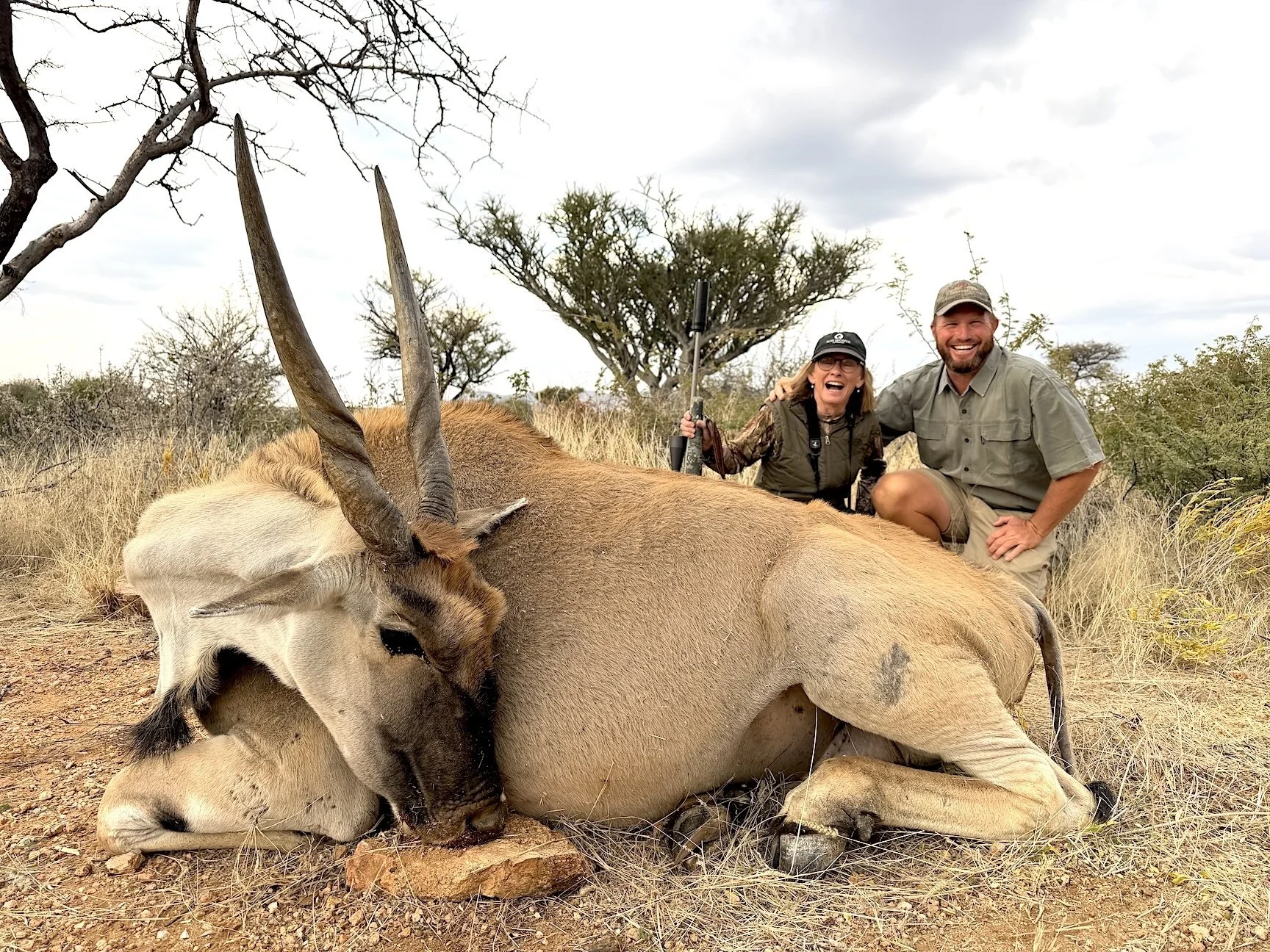
Just a pair of 120-gr. Barnes TTSX bullets from a little 7mm-08 Remington cartridge terminated this estimated 1,200# eland.
Don’t let “cow” fool you. This animal was likely several hundred pounds heavier than the heaviest bull elk you’ve ever seen or shot, probably the heaviest moose as well. It sprang from a long, strong line of eland that have survived thousands of years or lion and leopard attacks. Despite the “Africa tough animal mystique,” two tiny, 120-gr. all-copper bullets did it in, pronto.
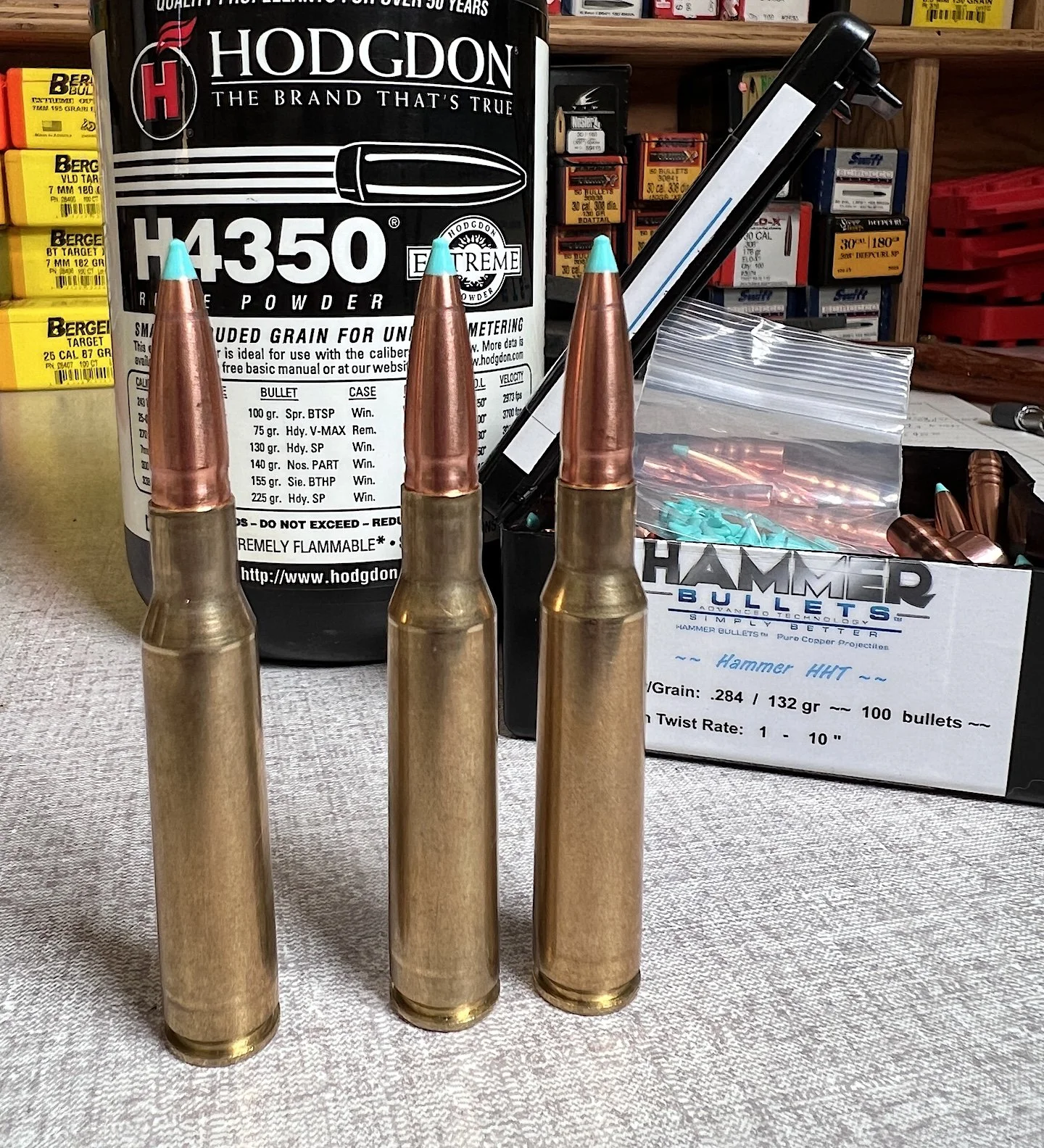
A fluke? Perhaps. But I addressed another cow eland from about 200 yards with a 132-gr. Hammer Hunter Tipped all-copper bullet from my Parkwest Arms SD-10 falling block, single-shot rifle. It left the muzzle at 3,000 fps, slapped the big antelope right on the front leg, broke its humerus bone, penetrated heart/lungs, and lodged under the skin of the offside shoulder. That’s a 132-grain 7mm bullet punching through the largest species of antelope in the world. Recovered weight: 87.5 grains. The stricken cow leaped and ran about 100 yards with the rest of the herd before expiring. Hammer bullets are engineered so that the petals break off to diverge from the main wound channel to tear additional arteries/tissue much the way traditional lead core bullets do while the shank continues forward. In my experience with five different cartridges and rifles, seven different bullet weights, and two dozen animals it has never failed.
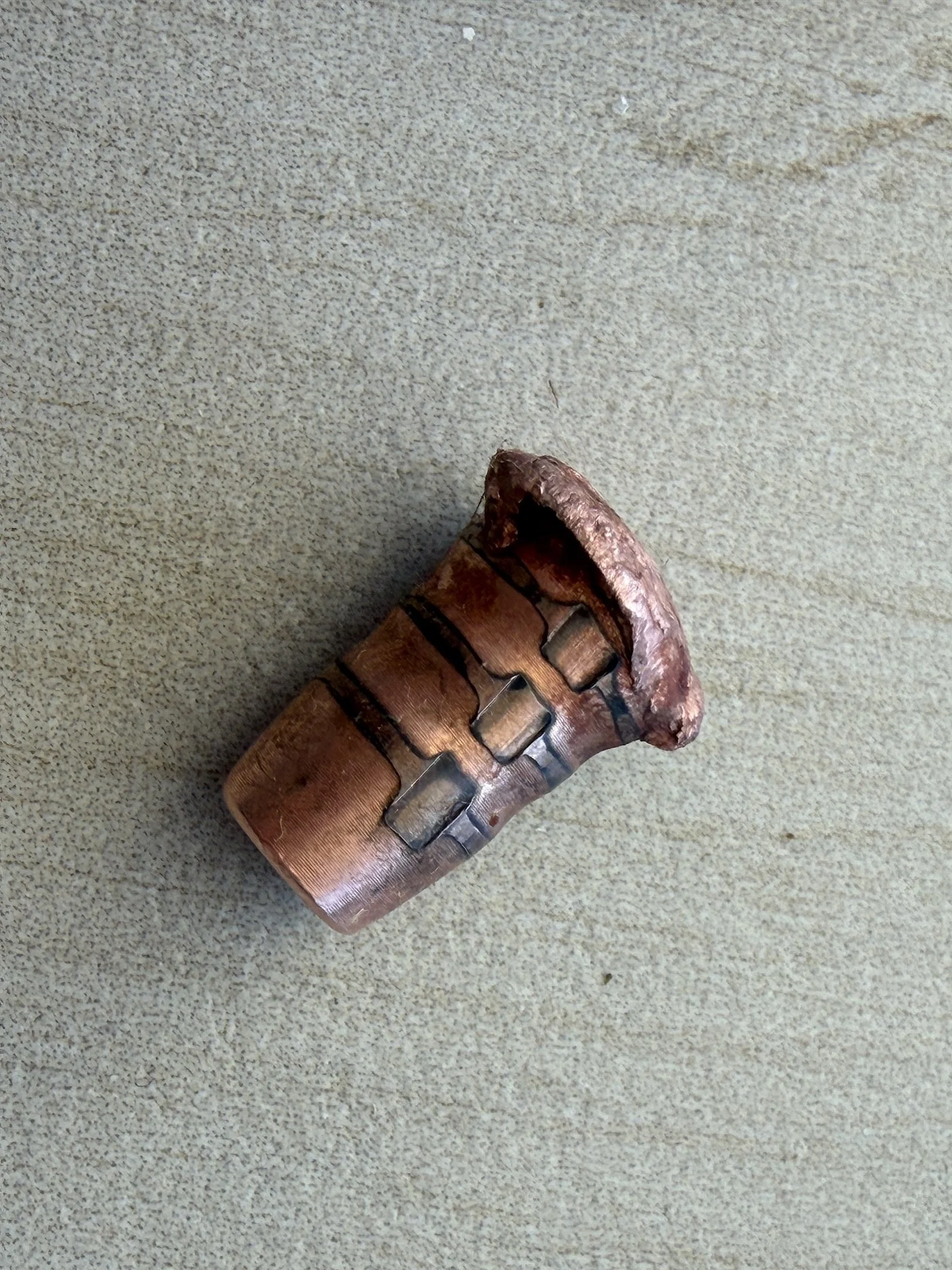
The132-gr. Hammer HHT recovered from Ron’s eland weighed just 87.5 grains, yet shattered the on-side shoulder bone, passed through the chest/lungs/heart, the opposite shoulder, and lodged against the offside hide.
Barnes TTSX copper bullets are engineered to expand and retain their petals. Those have worked for me in more cartridges, rifles, bucks and bulls than I’ve been able to take with Hammer bullets. Betsy’s again proved the efficacy of the TTSX. Her 350-yard shot at a cow red hartebeest struck low (Betsy’d been given a bad rangefinder call). Immenhof Safaris superb tracker Mateo puzzled out the trail for a half mile to find the dead antelope. The bullet had broken a front leg and passed just under the heart and out the other side.
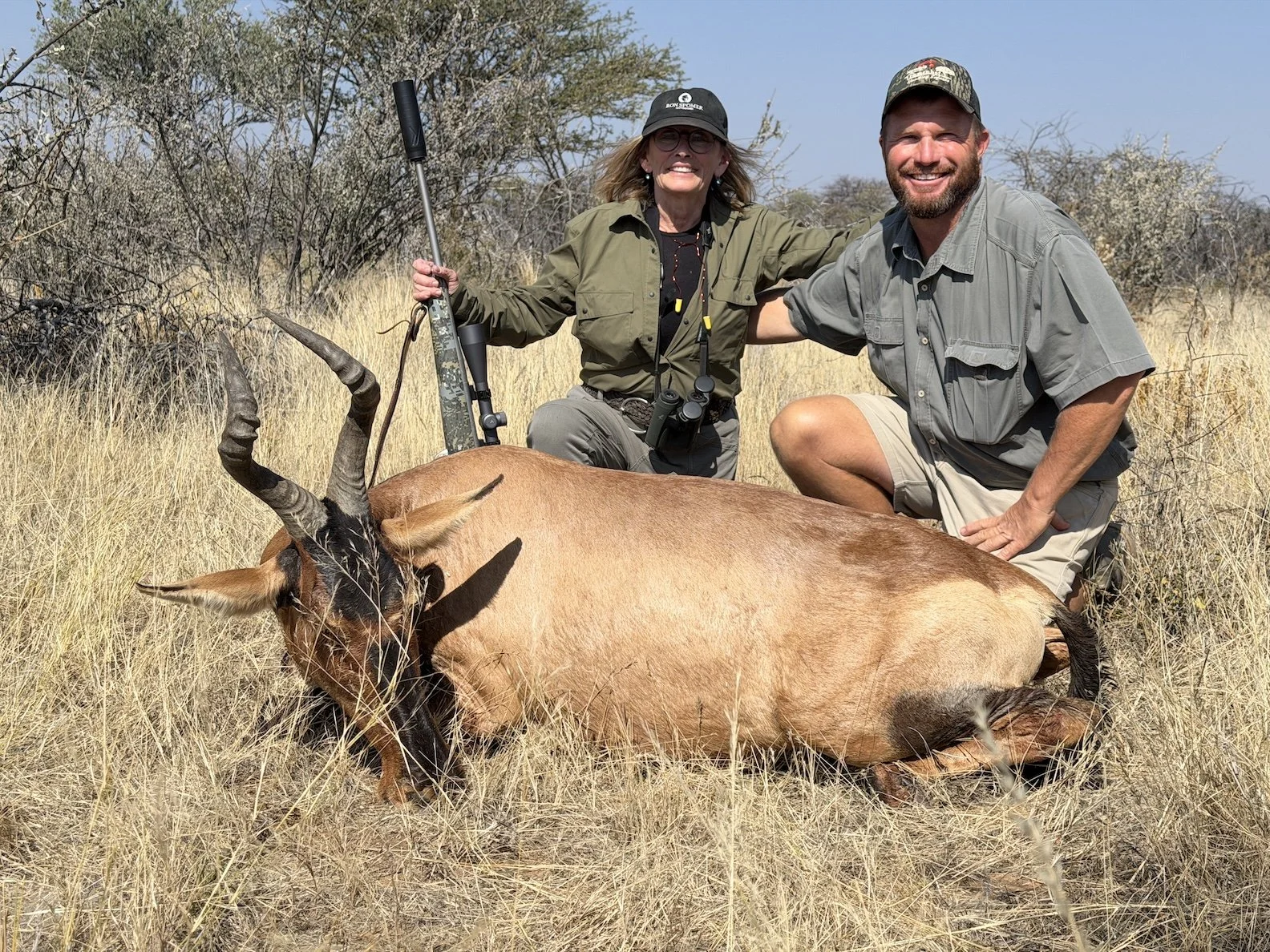
Despite a low chest hit from 350 yards, a single 120-gr. Barnes TTSX bullet killed this red hartebeest cow. Superb tracking by the Immenhof staff led to the recovery.
No such tracking was required for my red hartebeest. It made the mistake of stopping with its head above some brush inside of 150 yards. “Take her under the ear,” Werner said. No bullet recovery, but no meat waste, either. Any bullet would have worked for this head shot.
Our cameraman Landon borrowed my 7x57 to track down a long-horned cow oryx. Took all day. She was in a big herd feeding through the thorn brush around us. Cat and mouse for many minutes before a clear shooting lane appeared at sunset. Once again the little copper projectile turned the lights out. Pass through. High shoulder hit at about 80 yards. Landon’s first African animal, dead in its tracks.
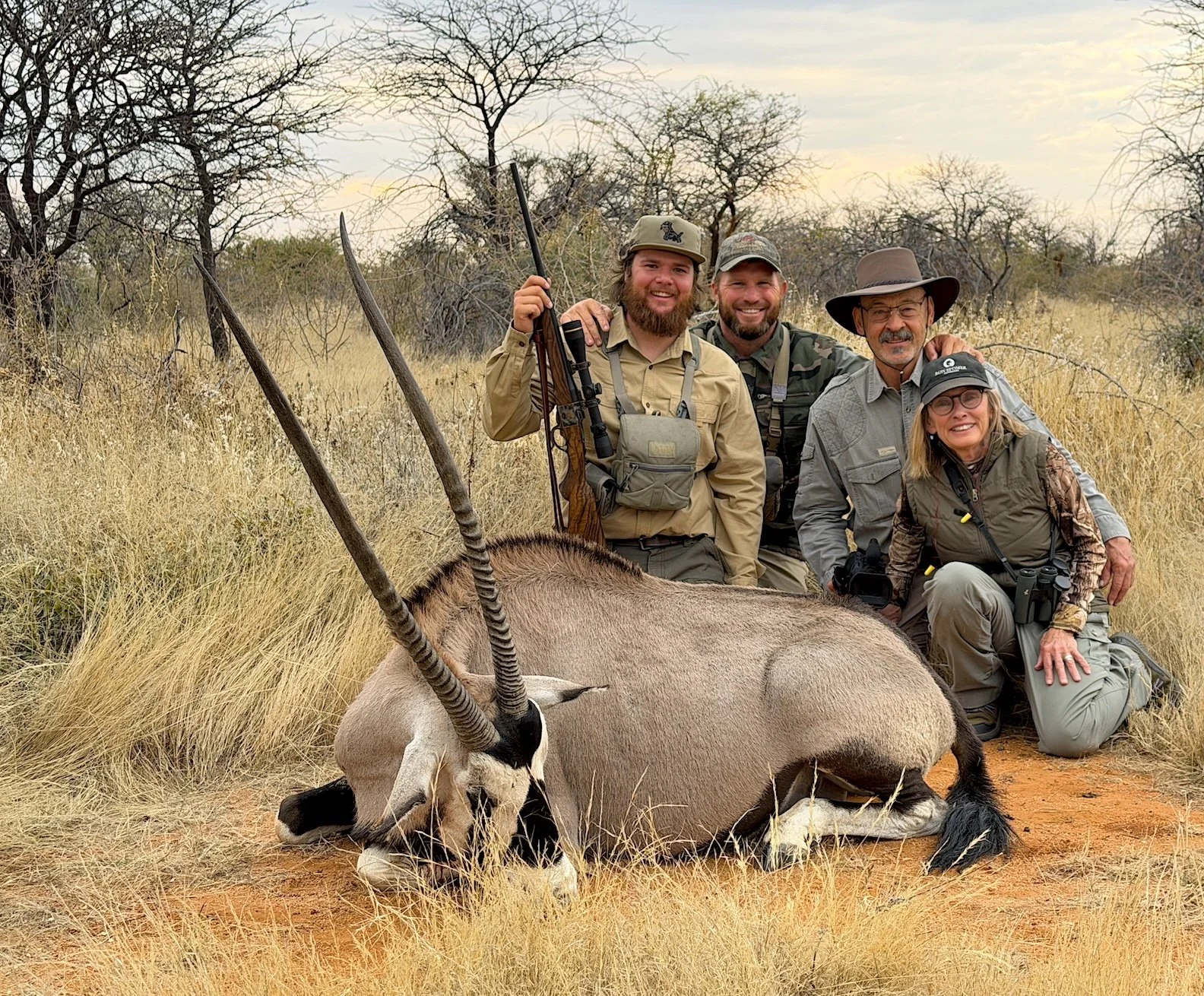
Landon was more than pleased with his first African safari animal and the performance of the 132-gr. Hammer HHT all-copper bullet.
Betsy’s steenbuck ram might be considered a bullet challenge because of its minimal size. Can a thin, light, 18-pound antelope initiate expansion from an all-copper hollow point? We’ll assume so because the tiny antelope flopped dead, shot through and through with the unrecovered 120-gr. TTSX.
At 250 yards, my blue wildebeest was a prime candidate for the 132-grain Hammer. I aimed high shoulder, but as I fired, the cow turned her head to look back and caught the bullet in the nose and out the neck on the far side. Instant demise. Again, that’s a lot of tough hide, muscle, and bone for a 132-gr. bullet to penetrate.
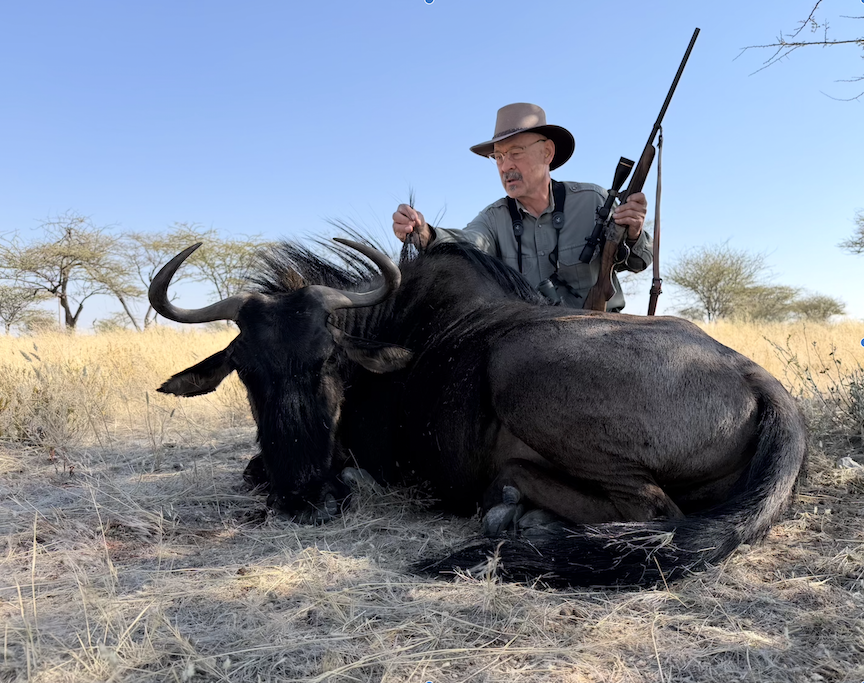
Even a cow blue wildebeest is a large, heavily boned African antelope infamous for absorbing large, heavy, traditional bullets and requiring more, yet a single all-copper Hammer weighing just 132-grains flattened this one. I once struck a blue wildebeest center chest with a 300-gr. traditional bullet from a 375 H&H — and never did recover it.
My oryx, like Landon’s, required some 10 miles of hiking just to locate at last light. A broadside shot from about 120 yards put the 132-grain hammer through both shoulders. A 60-yard dash and done. Things were getting predictable. Whether we hit major muscle and one or ribs and lung tissue, one bullet per animal was doing the job.
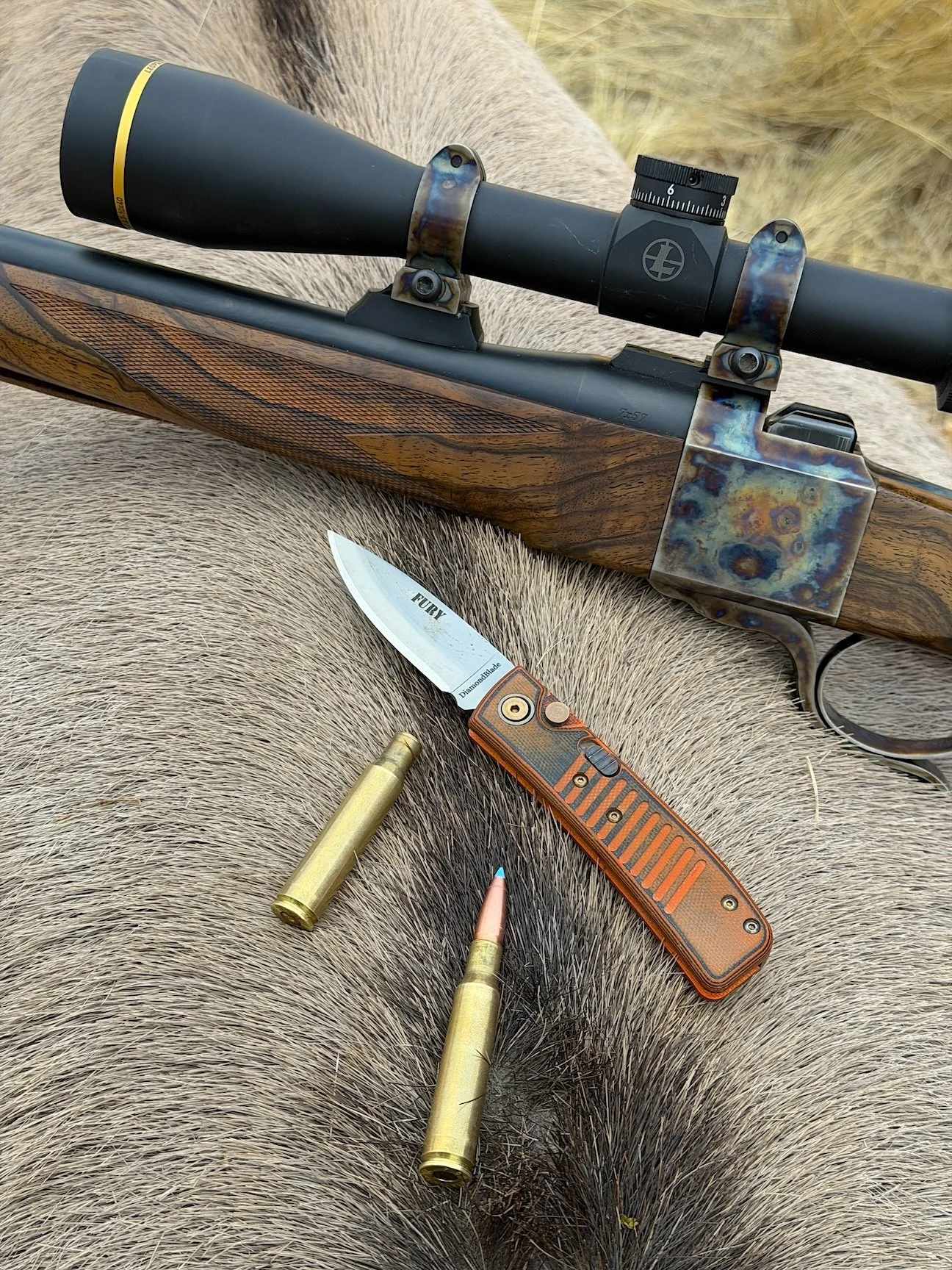
The empty case from the round that dropped my oryx and the backup round I didn’t need. This oryx is ready for my Diamond Blade Fury knife.
Landon again put on the miles in the search for a wary zebra. Two days of searching before he and Werner finally caught up with a herd. As luck would have it, the old stallion stopped at 135 yards for a quick look back. Landon put the Hammer through the neck and back into the body. Recovered without its petals, the slug weighed 87.5 grains.
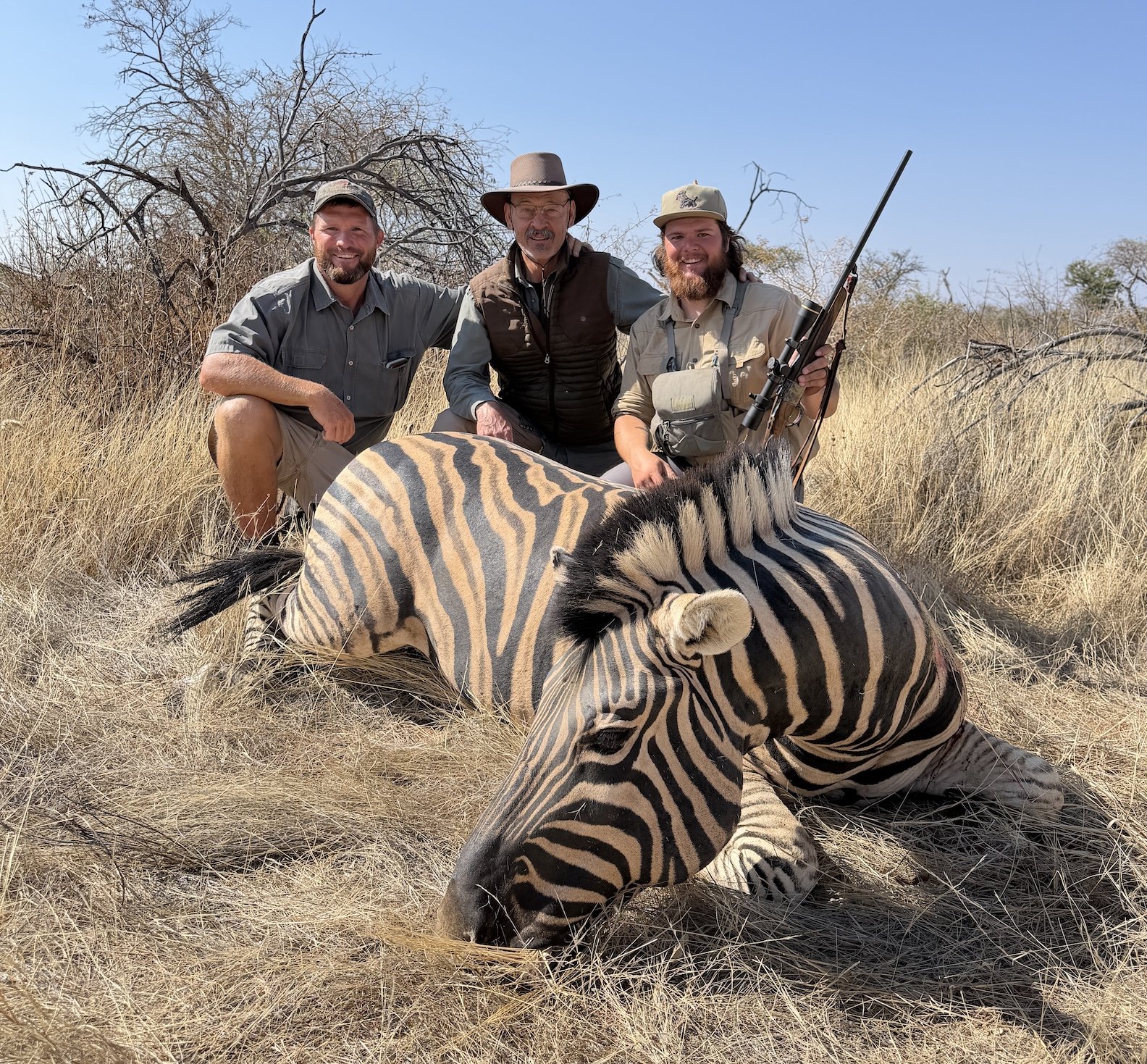
Landon discovered that the famously durable, strong, zebra stallion was no match for a single 132-gr. copper Hammer HHT from the 7×57 Parkwest Arms SD-10 single-shot.
This reliable performance with Immenhof Safaris in Namibia continued the next week at Crusader Safaris in South Africa. Betsy took a quick shot at a fleeing duiker when it stopped 125 yards away, steeply uphill. The TTSX zipped through the chest cavity, then through the little ram’s head because it had turned to look behind it at the shot. Dead in its tracks.
I engaged my first animal of our Crusader Safaris hunt, a fallow buck, from about 230-yards after a long stalk and some crawling. I lay prone and shot about 10-degrees uphill at the broadside buck. My Hammer struck a bit too low and broke one leg. My second centered the chest. A quick dash and the buck fell dead.
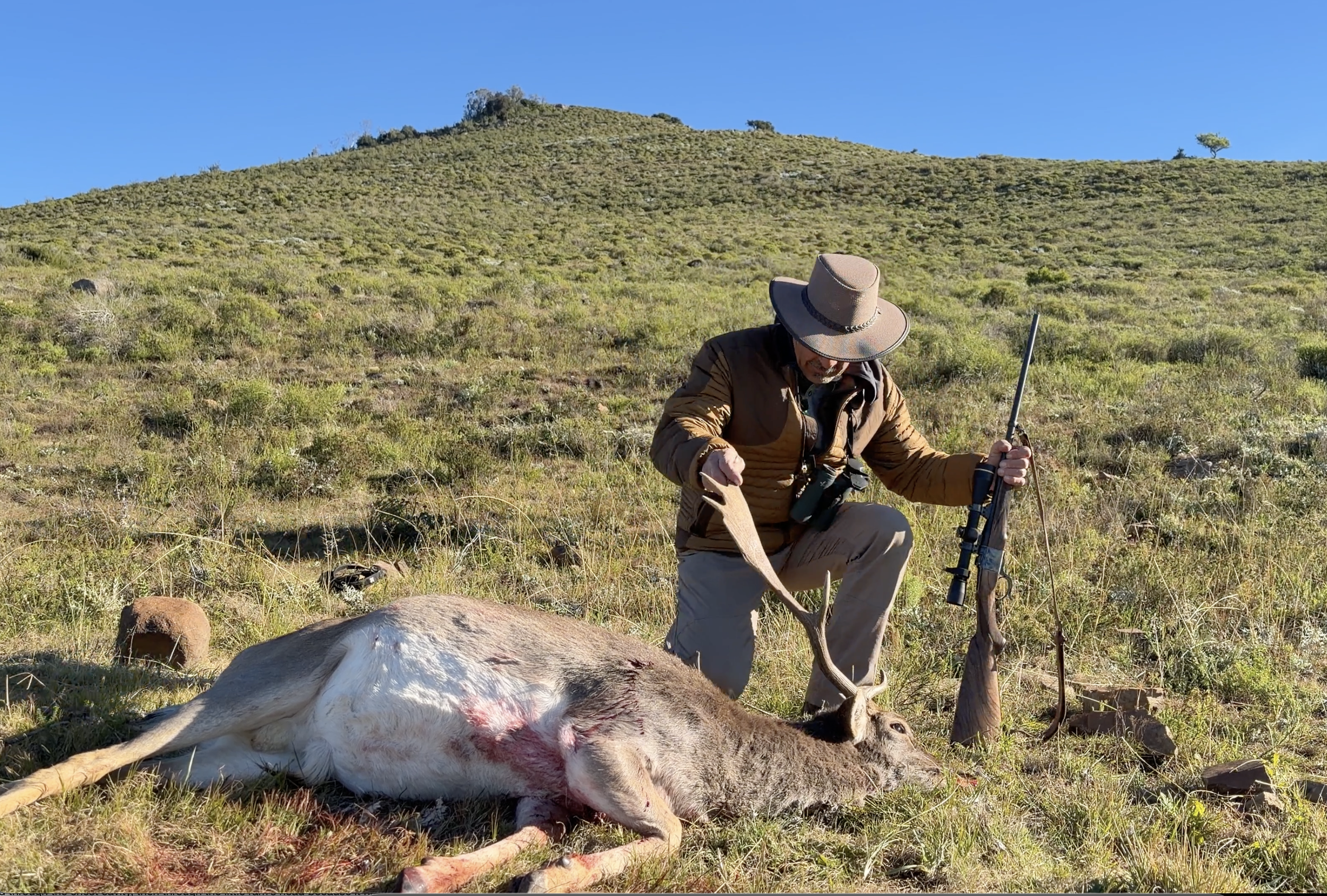
European fallow deer were introduced into South Africa in 1869 and have since naturalized. I hit this one an inch too low with my first shot, compensated with my second and scored. Crusader Safaris Baviaans Conservancy is full of fallow deer.
The next day another fallow buck presented a broadside chest shot at 175 yards or so. Another pass through and done.
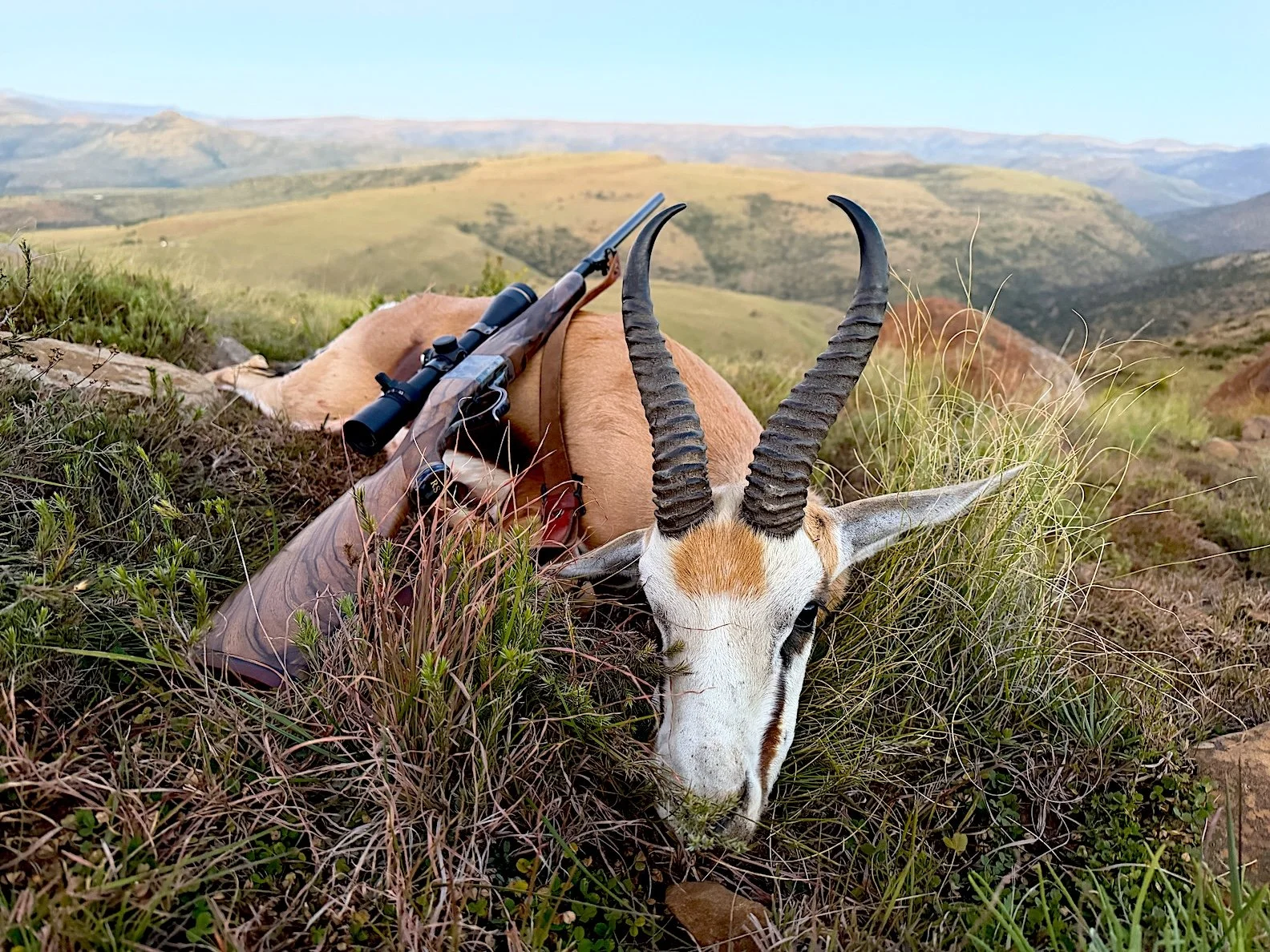
Murphy finally caught up with me when I launched a hurry-up, steeply downhill, 330-yard shot at a springbuck ram after sunet, striking it low. Flustered, I plain missed my next two follow up shots in the 370- to 400-yard range before sensibly stalking closer and finishing with a Hammer through the chest at 270 yards. It never pays to get rattled and rush shots.
The little bullet’s final test was a proper one, a massive black wildebeest quartering toward me with my aim on the point of its shoulder. The last time I tried that I was using a 300 Wby Mag. and 180-gr. bonded bullet. Despite being bonded, that bullet broke apart on the front leg bone, only part of it reaching the bull’s heart. This time the all-copper Hammer broke the leg, raked the lungs, and exited through a foaming, bubbling hole on the other side.
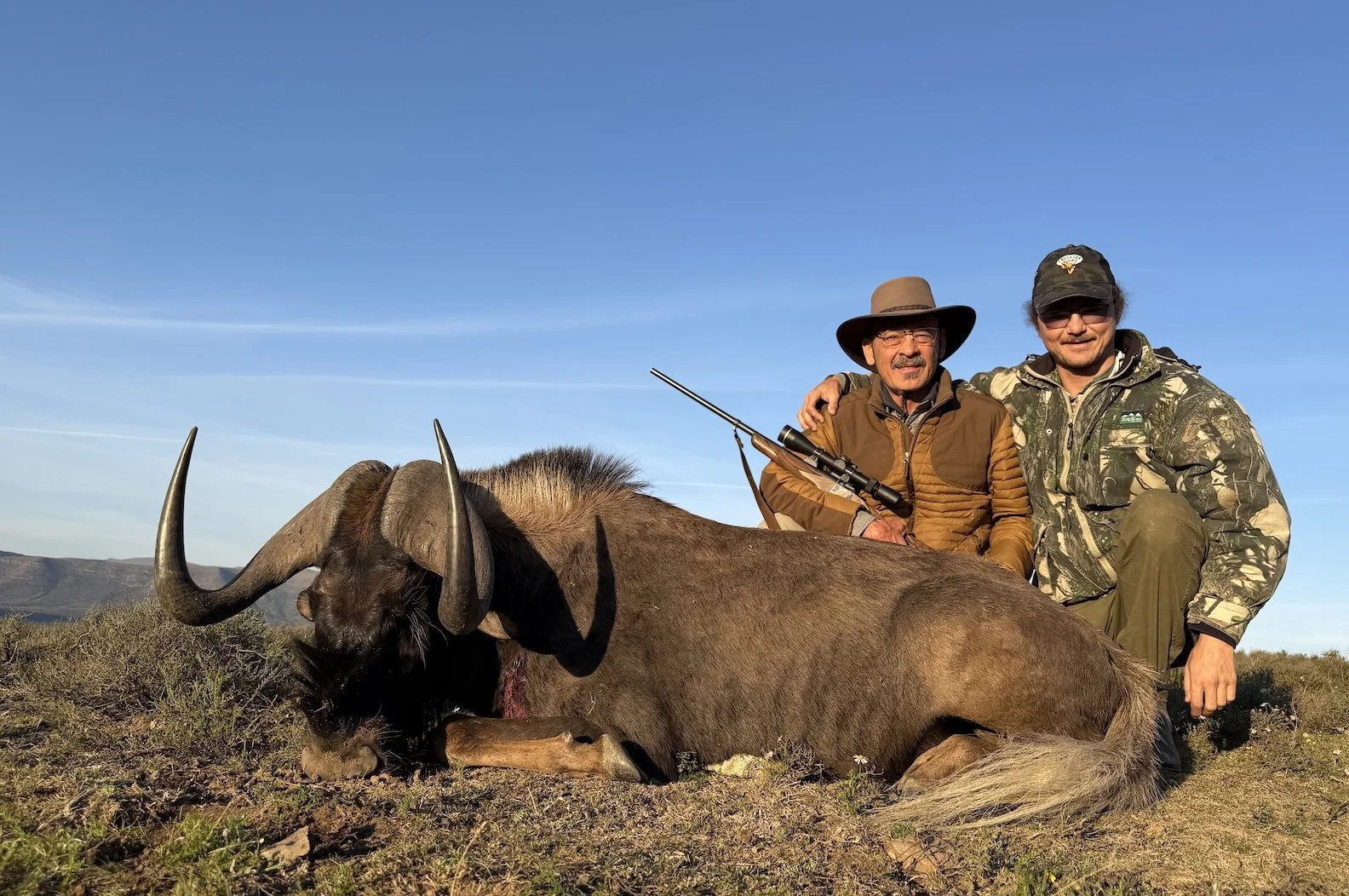
Black wildebeest bulls are another African antelope renowned for absorbing lead. I’ve seen them do it in the past. But one 132-grain copper Hammer from my little 7×57 applied to the leading edge of the on-side shoulder pushed through the chest and out the other side. One and done. What more do you want from a hunting bullet? PH Jason Goldsmith assured me this bull’s horns were huge.
My conclusion is more of a reconfirmation of what I’ve observed with all-copper, hollow-nosed or tipped bullets for years – they are accurate, fast, reliable, and sure killers with penetration well beyond what hunters have learned to expect from traditional, lead core bullets. Their ballistic advantages are:
1. Increased muzzle velocity (due to lighter weights in equal lengths.)
2. Decreased recoil.
3. High retained mass for deep penetration.
One downside is lower B.C. ratings due to lighter specific gravity, so they deflect a bit more in high winds. Both the curled back, retained petals of the Barnes TTSX style and the break away petals of the Hammer design contribute to reliable termination of game of all sizes.
I’m aware that legions of hunters are satifsied with the bullets they’ve been using for years. Great. If it ain’t broke don’t fix it. But if you’ve had some issues in the past or would like to try something different, take the information presented here and give coppers due consideration.
I am aware that there are at minimum a dozen more brands of similar all-copper bullets that reportedly work as well, but I can’t vouch for them because I haven’t had a chance to try them on game. Perhaps you can.