

Sound Advice for Hunters

Take it from a veteran hunter with 58 years of hunting and shooting in his rearview mirror: Hearing matters. And both suppressors and over-the-ear shell muffs can help protect yours.
Vision is our most powerful sense, smell our least, with hearing filling an important middle ground. Any deer hunter who has heard the mincing steps of an approaching buck orthe soprano bugle of a distant bull elk understands how “acute hearing” leads to hunting success. What too few of us seem to understand is how muzzle blast leads away from success — and destroys our ability to hear.
You may be thinking “Yada yada, blah blah thank you. I hear just fine, grandpa.” Yeah, so did I. Once upon a time in a land far away. Best listen to your elders on this one and do as we say, not as we foolishly once did.
If you’ve ever suffered ringing in your ears after a shot or series of shots, you know the sound of hearing destruction. Keep it up and you’ll eventually know the sound of silence. The sensitive, microscopic “hair” cells within your inner ear (inside the cochlea) bend to the impulse of sound waves. These send information to your brain which it interprets as sound. Excessively powerful waves literally wear those hair cells down. Such damage is permanent. The more worn and abused your cochlea hair cells, the weaker your hearing. So…
Protect those ears! Young hunters can (and often do) play macho tough guy and shrug off muzzle blast, but I’ve yet to meet a middle-aged hunter who does. Not when the gun shots of his youth now manifest as the inability to hear the approach of a deer or bear, the howl of a coyote, the subtle purr of a turkey.
Trust me, when you can watch a songbird’s beak open and close without hearing its song, you’ll be shocked. And saddened. And when you can’t hear the flush of a grouse behind you, you’ll miss countless shooting opportunities.
If you want to fully understand the topic of hearing damage from noise, read the special section later in this blog, but if you want to jump right to the pragmatic steps you can take to protect your hearing, here they are…
Muffle Your Ears, Part 1: Plug them. Stick a sock in it. Better yet, stick in those little, squishy, foam ear plugs. You can get them unattached (easy to lose, so carry many in pockets, pack, truck, gun case, etc) or attached to one another with a small string or on the end of a springy plastic hoop. The latter two prevent easy loss, but all require time to stick in your ears. Time you don’t always have when hunting. Solution? Anticipate shooting opportunities and stuff those ear holes before continuing to your shot.
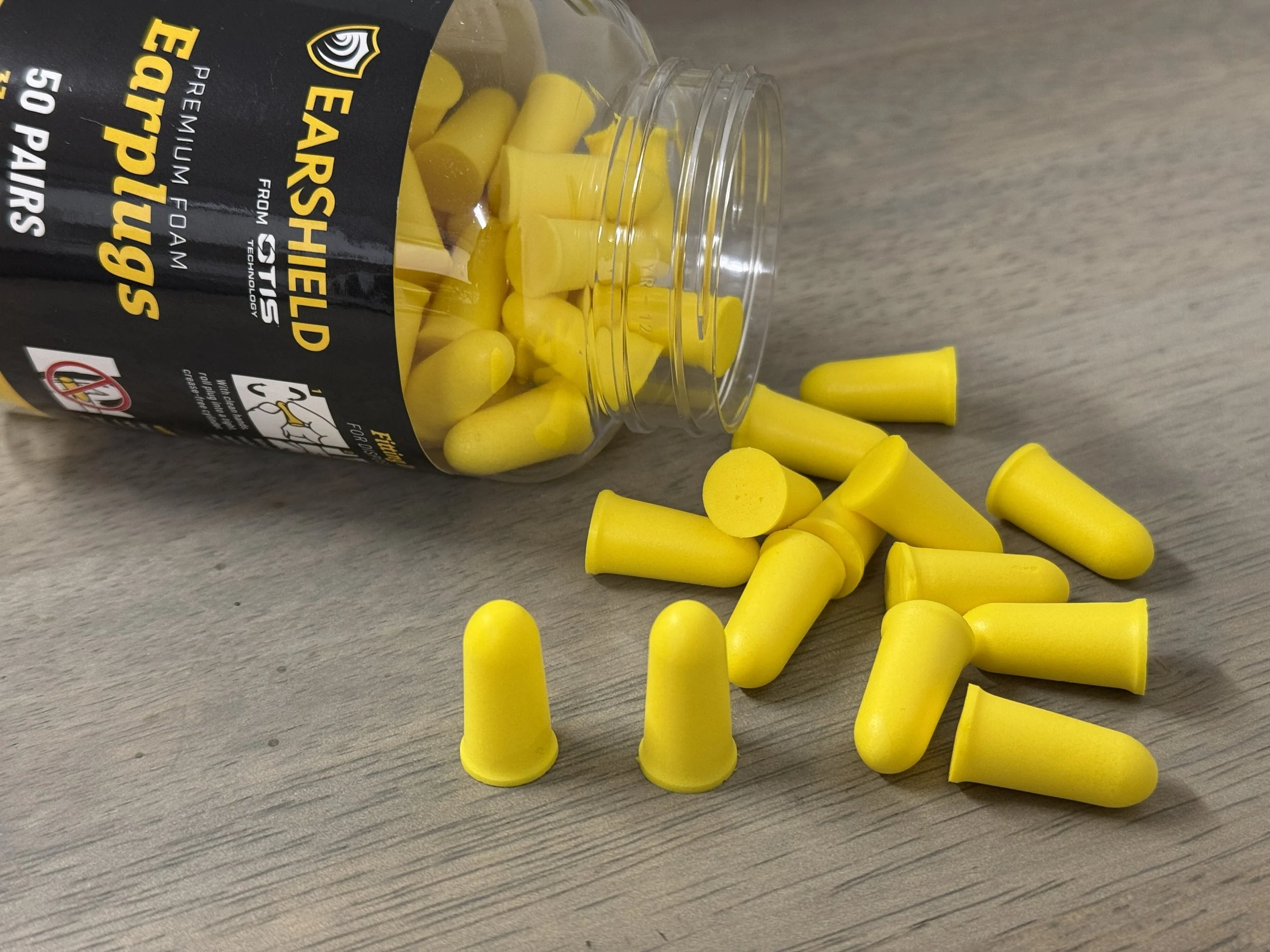
Muffle Your Ears, Part 2: Wear shells. You know, those classic, rigid plastic ear covers you see on shooting ranges. They work just as well for hunting, especially if you hunt from a stand. You can slap a set over your ears much faster than you can squeeze and stuff foam plugs in. Most now come with enhanced hearing amplifiers, too, so you hear conversation at the range and wildlife in the field.

Muffle Your Ears, Part 3: Electronic ear plugs. These are the small units rather like hearing aids that plug your ears while amplifying all sound and shutting down sudden, loud blasts. This is what the over-the-ears muffs do, but the in-the-ear models are much smaller. However, I’ve always found that such in-the-ear electronic units enhance wind noise and my own breathing and heartbeat to distraction. Drives me nuts. I can live with them if sitting still, but if I’m actively hunting or it's a bit breezy, no dice. Not everyone has these issues. The other thing I don’t like about these small units is losing them. I’ve had them fall out during the heat of the action, but usually they seem to simply disappear in the truck, a drawer, a pant pocket…
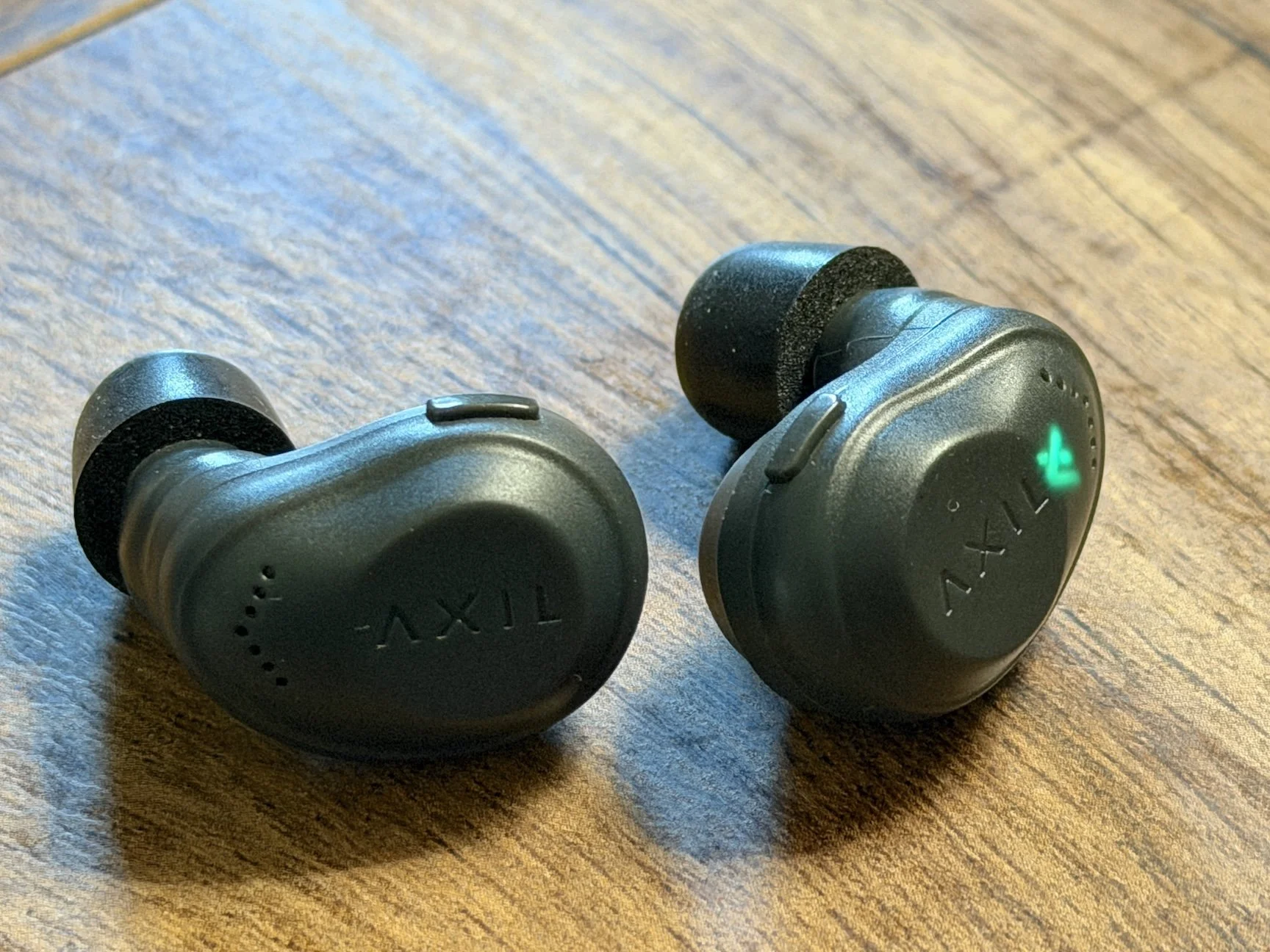
In-ear hearing protectors/enhancers are great — until you lose one.
Muffle Your Gun: Silencers, suppressors, cans, gun mufflers. Call them what you will, but these end-of-barrel sound suppressors do just that — they suppress muzzle blast by as much as 30 dB. That’s a big deal because the decibel scale is based on a logarithm of 10. Each number on the deci (10)-bel scale represents a 10-fold increase in the power of the sound wave. A 20dB increase in sound is 100 times louder, a 20dB decrease 100 times quieter. A 30 dB reduction is 1,000 times quieter! The sweet thing about gun mufflers is convenience. They’re always “on” and ready to muffle those blasts. The sour things about them are cost (hundreds of dollars), extra weight/length added to your gun, an unflattering appearance, and a bit of government red tape when buying one.
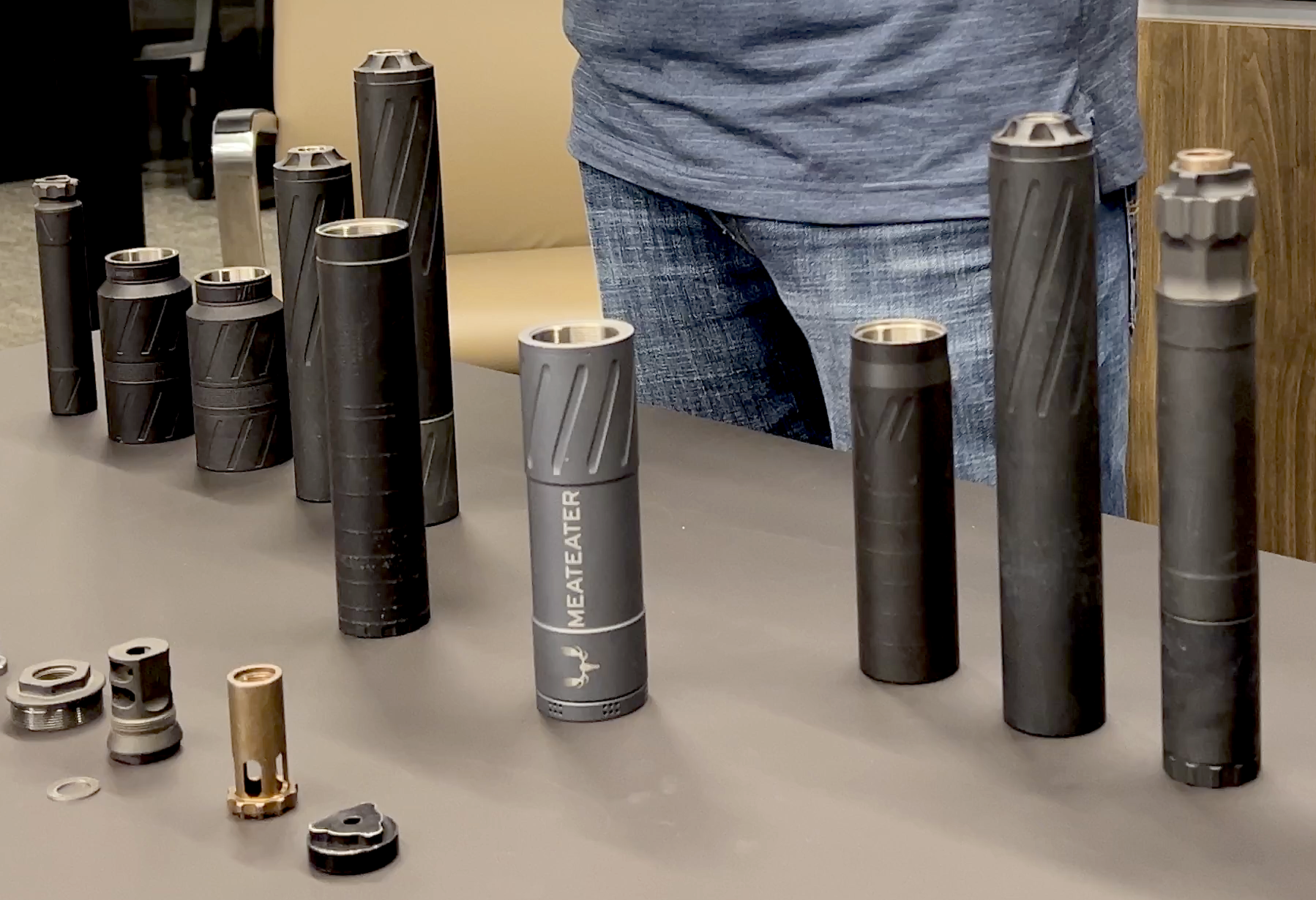
Silencer Central makes and markets a variety of mufflers plus makes it easy to shop and buy from your home computer or phone.
The frustrating aspects of all hearing protection options are obvious. Ear plugs and muffs are easy and effective on the range, less so when hunting. One often has no time to put the covers in place. One fumbles and drops the foam plugs. The sound attenuators (silencers) are instantly ready and effective in the field, but do add 5 to 8 inches of overall rifle length and 8- to 16-ounces of weight. The biggest challenge with silencers is government red tape. These simple mufflers were placed on the firearms restricted list in the 1934 National Firearms Act as a political tradeoff to keep handguns off that list. To legally obtain, own, and use a suppressor, you must apply and survive a background check and pay a one-time tax of $200, a process that used to take more than a year! But there’s good news: Silencer Central has worked with federal and state bureaucrats to clarify, simplify, and speed up this process. The average wait is now about a week. And Silencer Central provides all the paperwork and walks you through it, step by step.
There is a fingerprinting exercise that freaks out many who fear the government is trying to register their firearms for future confiscation. Who knows. Maybe. But the folks at Silencer Central tell me the fingerprints are a vestige of the old system where they were needed to determine applicants weren’t wanted felons who already had their fingerprints on file with some police department or the FBI, etc. These days the applications for silencers get run through the same computerized background check system applied to every firearm purchase.
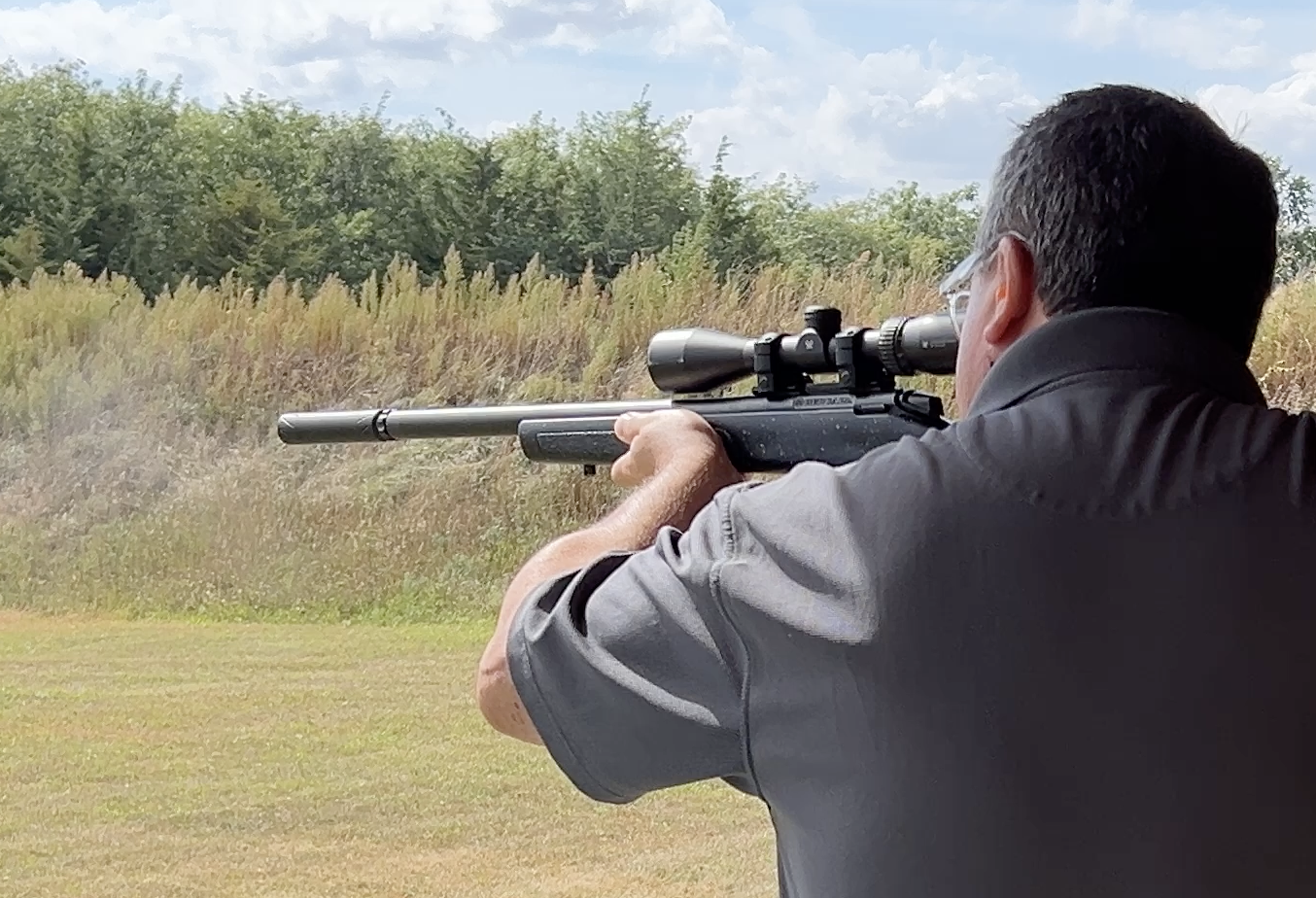
A suppressor/silencer/muffler/modifier/can adds length weight to any rifle, but the reduction in muzzle blast makes them beloved by users.
One silencer can be used on many rifles of the same or smaller diameter. A 30-caliber “can” can be used on 7mms, 27-calibers, 6.5s, .257s, .243s, and even 22s, although the extra gap around those smaller bullets lets more of the “bang” escape.
The ultimate option for eliminating muzzle blast while hunting is to hunt with a bow and arrow. Second best is a combination of silencer, foam plugs, and shell muffs. Start with a 300 Win. Mag. blasting out, say, 170 dB of explosive roar. Screw a suppressor on it and the noise is reduced to about 140 dB. Better, but not perfect. Shove foam plugs in and knock off another 30 dB and you’re at 110 dB, about the noise level of a chain saw or rock concert. Pop on the shell muffs and you are down around 80 dB! (These numbers are not exact because each protective device duplicates some of the previous noise reduction.)
Regardless which tools you use to protect your hearing, use them religiously. A single muzzle blast will weaken cochlea hair cells that will never grow back. You’ll pay for your oversight with hearing loss — for the rest of your life.
The Science of Sound Special Section
Excessively powerful sound — the level of volume that damages hair cells — starts roughly at 85 decibels (dB). I say “roughly” because at that power, you must hear it constantly for eight hours to suffer damage. That’s about the volume of a large, noisy party. Ramping the dB up to just 90 dBA, about the volume of a hair dryer or lawn mower, reduces the safe listening time to just 2 hours. A typical rock concert scorches your ears with 112 dB that can ramp up to 150 dB. Fifteen minutes of it won’t do you any favors. But those are nothing compared to gunshots…
Sudden, explosive levels of “impact” sound at 140 dB (peak pressure measurement), like a gunshot, can damage hair cells in an instant. You might be surprised to know that a standard velocity 22 Long Rifle’s muzzle blast is about 140 dB. A 50 BMG peaks at about 180 dB. Sandwiched between these are virtually all the common sporting, self-defense, and hunting cartridges and shotshells we use. Each shot with any of them wears down our ability to hear, the higher pitched frequencies first and worst. This is why shooters with moderate to severe hearing loss register only a 10 percent loss at lower frequencies, but as much as 80 to 90 percent loss at 3,000 megahertz or higher.
These high frequency losses are why we hearing-impaired hunters can’t understand conversation. The consonants that define and differentiate vowel sounds are short, high pitched, and soft. So, the subtle difference between tick and sick and rick and nick can be lost. High-pitched speakers like women and children are difficult to understand. And if there is any background noise like a motor, fan, music, room conversation… forget it. Grandpa Quick Draw is not going to understand you. This seriously compromises one’s quality of life and can contribute to dementia. So do yourself a favor. Protect your hearing from gunfire!