
DANGER: Old Gunpowder Can Kill You

Quote

Would you trust this old can of gunpowder? Will it explode if you shake it? Catch on fire in a hot room?


Ron Spomer Outdoors - Old Hodgdon Rifle Powder     Ron Spomer Outdoors - Old Hodgdon (back of can)

Farmers in France still uncover unexploded bombs from WWII. Local authorities often dispose of those bombs by exploding them. Yup, the things remain viable and dangerous after more than 65 years.


So does gunpowder and hunting ammunition.


Sort of.


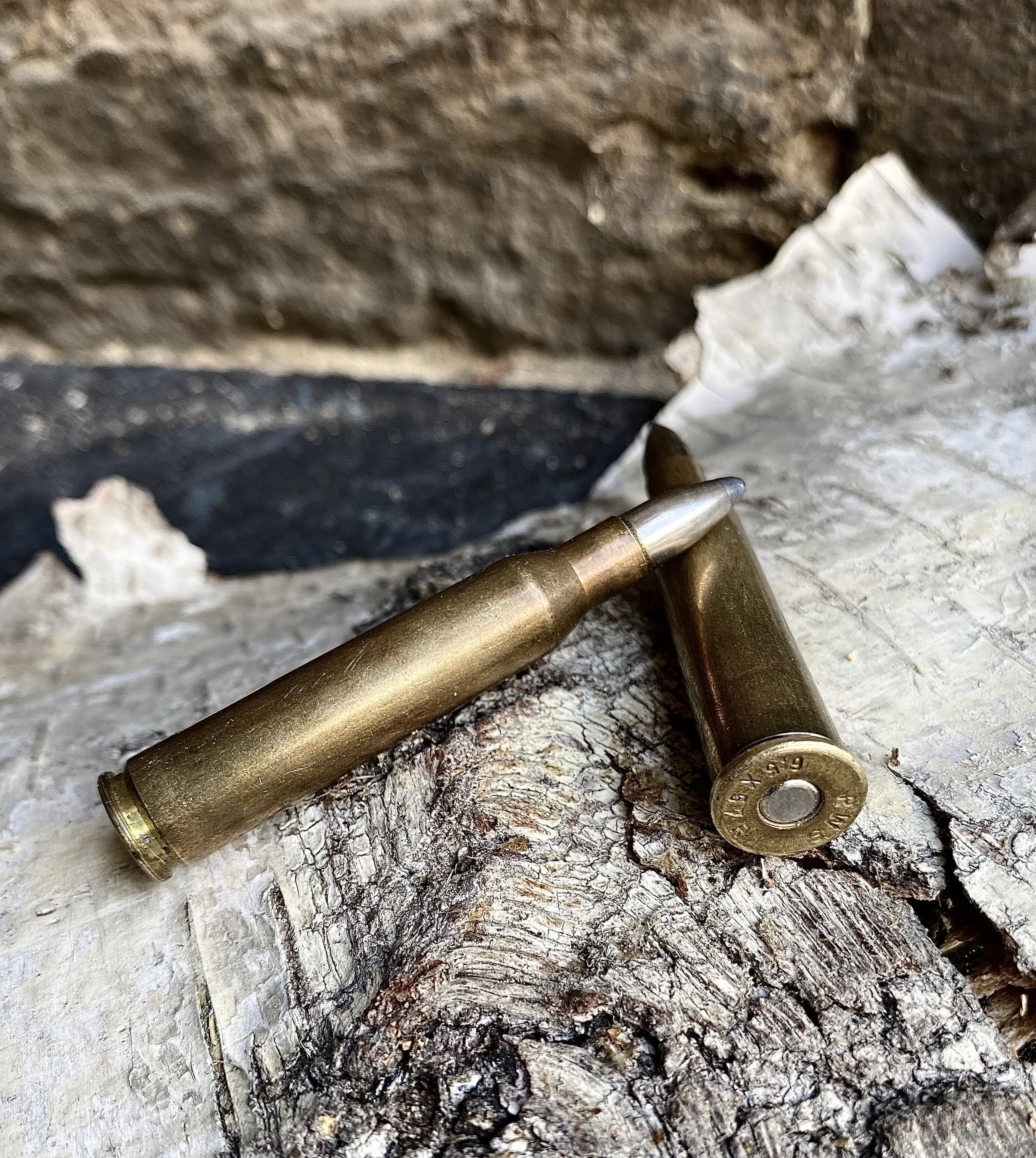
The smokeless gunpowder inside old rifle cartridges is quite stable and could be as potent today as it was the day it was loaded, therefore such ammunition can be dangerous if it’s chambered into a suitable rifle and fired. The bullet flying from the muzzle is the dangerous part. The cartridge itself – and the powder within it – are no more “dangerous” than a brand new cartridge. This is because modern gunpowder (smokeless) is not an explosive. Stick a match to a heap of it and it burns, but does not explode. Even old blackpowder doesn’t explode unless, like smokeless powder, it is confined. When the powder burns, the resulting gas raises pressures and, like air escaping from a punctured balloon, goes bang. They also “blow apart” the confining vessel, or, in the case of a firearm, blow an obstruction (bullet) out the muzzle. Cartridges thrown into a fire will pop and fling debris, including bullets, but not with the force generated through a barrel.


Nitrocellulose gunpowder does deteriorate with time, moisture and heat, but it becomes less potent, not more. There have been reports of large quantities of smokeless military powder confined in relatively small spaces (small rooms, perhaps cellars) degenerating to acidic gases and those gases exploding, but I have never heard of small quantities of common handloading powders exploding.


But what do you do with a canister of old gunpowder? According to Chris Hodgdon of the Hodgdon Powder Company in Shawnee Mission, Kansas, the powder in the canister shown here is WWII surplus likely manufactured way back in the 1930s or 1940s, then packaged and sold by his company in the 1950s or early 1060s. Mr. Hodgdon went on to write that the stuff in the can is “probably good if [it was] properly stored. Check for deterioration by three factors: strong smell, rust colored kernels (or rusty dust) and warm to the touch. [If] Any of these are present GET RID IF IT. Old powder makes great fertilizer for the lawn.”


So sprinkle it in your garden or lawn and water it down. But if it appears to still be good, feel free to follow directions in a handloading manual for H4831 powder and build a test load using the recommended starting dose (low powder quantity, low pressure.) Shoot this over a chronograph such as the Oehler Research 35P and note the velocity. If it falls near the numbers listed in the recipe book, the powder is still potent.


Knowing this, handloaders can sometimes find and buy “old” powder for pennies. Look at the $2.50 price on the can in this picture. Today’s H4831 is selling for about ten times more.


# # #

Where to For Western Whitetails?

Quote

Ron Spomer - Winchester World of Whitetail on NBC Sports Network

An RSO visitor named Bill from way back east just asked for advice on Western whitetail outfitters. Smart guy. He’s looking the right direction for great whitetail hunting.


I explained to Bill that, while I can’t guarantee any outfitters, I have had great luck with Laughing Waters Ranch Outfitters near Bassett, Nebraska. Check out a short video on YouTube. LWRO has great river bottom habitat and lots of big bucks. I took a 143 net there two years ago, a 150 gross last Nov.

 
In Alberta try Willow Creek Outfitters with outfitter Andre van Hilten south of Calgary near Nanton. With Andre you have a good chance for both a mule deer AND whitetail. Eastern Montana has long been a great trophy whitetail destination, but 14 months ago it suffered a major winter kill. As if that weren’t bad enough, late last summer EHD (a viral disease) hit, wiping out as many as 90 percent of the surviving whitetails in some spots. Check carefully before booking in Montana. Some ranches retain good bucks, but it’s spotty.


Wyoming is usually good around the Black Hills and Sheridan areas. Eastern Colorado is super for massive, mature bucks, but I suspect you’ll pay a steep price for access. Expect huge mule deer in the same habitats. South Dakota can be outstanding in places depending on harvest pressure. North Dakota is a sleeper. Kansas is always great, but outfitters there seem to be following the Midwest model — they stick you in a stand and there you must sit. But man, do they have bucks! If you enjoy sitting and waiting, Kansas would be a good use of your time.


I’m afraid I can’t recommend Idaho anymore. In the 1980s and early 90s it was producing excellent whitetails, along with the best branch-antlered elk hunting in the country. Shiras moose were popping up like mushrooms in May. I saw 11 in one day while hunting grouse east of Idaho Falls! But the wolves seem to have “overharvested” Idaho’s big game. I haven’t seen a moose in years, elk numbers have nose dived in many places and whitetails are huddling on rural doorsteps to avoid wolves.


Texas is, of course, big time whitetail country, but most of the hunting is somewhat contrived in that deer are intensely managed. So are hunters. You may be directed to sit not only in one stand your entire hunt, but over a feeder that “goes off” at 8:45 AM and 4:40 PM each day. You could even be told to shoot the 4×5 with a broken G3 on the right side, but not the 5×4 with tall tines and a broken G1 on the left. This is just one way Texans manage to produce so many fully mature, spectacularly antlered bucks. They harvest no buck before its time. But this takes the “hunt” out of hunting for some of us. If you don’t mind such restrictions, Texas can certainly produce a huge buck for you.

 
Truly, any western ranch with whitetails and controlled access can provide outstanding hunting. Your success depends on the services the outfitter provides (food, lodging) how much pressure he puts on the deer, how freely he lets you hunt, how hard you hunt and how effectively you hunt. I’m betting you’ll see more and larger bucks on any western hunt than you see in a season in most eastern states. But don’t take my word for it. Head West and try to prove me wrong.


(Like the photo at the top? Watch me take this buck in a new episode of Winchester World of Whitetail on NBC Sports Network later this summer or early fall.)


# # #

Spomer Stops Rogue Bull Elephant!

Quote

Spomer Stops Rogue Elephant at 20 Yards!
There are places in Africa where elephants still run rampant, destroying crops, huts and people. Countries like Botswana, Zimbabwe and Mozambique permit elephant hunting in order to control herds and bring in revenue to offset elephant depredation. Sport hunters pay tens of thousands of dollars to take a single elephant, the money going to placate villagers and maintain reasonable elephant numbers. In places such as Hwange National Park in Zimbabwe, pachyderms swarm in numbers far beyond the carrying capacity of habitats. In many cases control officers are forced to shoot hundreds of cows and bulls to prevent destruction of vital trees and grasslands – habitat needed by other African species.


To my surprise, I had to stop a charging bull today. It jumped in front of my PH and me as we were tiptoeing down a trail in the forest of Texas, of all places. As the accompanying photo shows, this was a two-dimensional elephant, about as close to the real thing as I’ll likely get. But it sprang from the woods and I stopped it. Put a 168-grain Hornady A-Max bullet through its brain while using a Ruger American .30-06 rifle. This isn’t a recommended elephant gun, but it’s a great way to have some fun while training to shoot quickly under pressure.


Shooting and training like this goes on weekly at the FTW ranch where former Navy Seal sniper instructors and African hunters teach novices all the ropes for shooting effectively. My experiences here have enlightened me to a real need among my fellow hunters – the need to practice.


We American hunters tend to labor under the delusion we are natural game shots. Hey, it’s our heritage. Dan’l Boone and all that. But no one is a natural shot. And unless one practices shooting – seriously and repeatedly with proper technique – no one becomes an accomplished shot. Can you hit a deer that jumps up 20 yards in front of you? Can you put two rounds into a buffalo’s chest, reload your rifle, run 20 yards and put a third shot into the brain pan of another charging bull? Or even a coyote?


Can you adjust your scope or hold over a target 430-yards away and compensate for a 5 mph quartering wind just the right amount to drop a bullet onto that 9-inch target? If not, perhaps you should consider a shooting class. Today friends and I hit targets as far as 700 yards away, consistently and repeatedly, thanks to class work, study and instruction.


I know this might rub you the wrong way. It did me. I grew up a typical country kid unwilling to “waste” perfectly good hunting ammunition shooting targets. The result was I wasted more ammo while simultaneously wasting big game tags and wonderful opportunities to put venison in the freezer. I now realize that skimping on practice time and ammo is a great way to miss the buck of a lifetime. Far better to spend several hundred, even several thousands of dollars learning how to shoot correctly the first time. Then you don’t waste those rare, golden opportunities to take real game while slowly learning how to shoot. Were I a new shooter today, I’d invest big money learning to shoot before I invested bigger money on rare tags, hunting trips and fancy rifles. The Ruger American Rifles we were shooting today sell for less than $400, the Zeiss Conquest scopes for about $500. And they performed beautifully.


Whether you pay to attend a shooting class such as those taught at the FTW Ranch (http://www.ftwoutfitters.com) or teach yourself in the back pasture, you owe it to yourself, the game you hunt and your hunting heritage to practice and learn to shoot well BEFORE you hunt. Shoot near and far and then really far. Shoot quickly and slowly. Shoot precisely. Shoot until you know your rifle and ammo and trajectories like the path from your bedroom to bathroom. Then go hunting confident that you can make shots when you need to and skip those you know you can’t make. You’ll be the envy of your friends and the curse of deer and bunnies everywhere.


Hunt well, shoot better and enjoy dinner.


# # #

Ruger’s New American Rifle a Winner

Quote

Ruger’s New American Rifle Bargain


I was wrong.


When I saw the new Ruger American rifle I thought it was a cheap step down for this venerable American rifle maker. But now I’ve shot the thing – and I’m impressed. Really impressed.


In .30-06 Springfield the American — sighted with a Zeiss 3-9×40 Conquest scope – is shooting a Hornady 168-grain A-Max Garand load (2,600 fps) one-MOA. Consistently. I fired one 200-yard group that went sub-MOA. That’s three bullets into a 1.2″ circle. And all shooting was done prone off a bipod, not a sand-bagged benchrest. Target distances varied from 100 yards to 500 yards, and no bullet landed more than 4.5 inches from point of aim until my 40th shot, which just missed high left at 500 yards.


Friends, that’s an accurate rifle.


But for less than $400 how can it be?


You read correctly. This rifle will retail for less than $400, perhaps even less than $300 during some sales.


Let’s outline this rifle’s features. First, it is 100-percent American made. Every barrel, screw and spring is made here, thus the American name. I like that. Second, the barreled action is set into steel V bases molded into the thermoplastic stock. The barrel is free floating, and the bedding screws pull the base metal against the screws and V bases without touching or stressing the stock. So, even though the inexpensive plastic stock is somewhat flexible, as are all molded stocks, bedding pressure is constant and consistent. A flexible, hollow recoil pad really soaks up recoil.


Third, each cold-hammer-forged barrel is tightened to the action with a locking nut for precise headspacing. Fourth, the bolt is a three-lug design. This might not contribute anything to accuracy, but it results in a 70-degree bolt lift for quick cycling. The bolt body is full sized, so it slides smoothly without the need for guide rails and without binding. Fifth, the trigger is a Marksman adjustable trigger (from 3 to 5 pounds pull via a single screw) with a passive trigger-mounted safety that blocks the trigger. There is a tang safety, too. With the tang safety “on,” the bolt can be manipulated to run rounds through the action. But that shouldn’t be necessary, since each American rifle wears a detachable, four-round magazine. Snap it out, run the live round out of the chamber and you’re unloaded and completely safe.


The black plastic magazine box is smooth, consistent, easy to attach and detach and equally easy to load. In addition, it’s rotary, much like the familiar Ruger 10/22 magazine. Each round rotates up, aligning dead center with the chamber for easy and consistent loading. During my 60 rounds of shooting I had no glitches. The magazine loaded smoothly every time, snapped into place perfectly every time, fed perfectly every time.


The cartridge ejection port in the receiver is minimal. This means there is a bridge of steel arching over the top where most rifles have been cut away, exposing more bolt body. While that looks proper to an old shooter’s eye, it isn’t as inherently stiff as this style. More steel means more rigidity.


Each rifle ships with Weaver-style bases included, and if you send in your warranty card Ruger will return you a nylon cheek pad and ammo carrier that straps onto the butt stock. It’s valued at $20.


If this rifle sounds too good to be true for this price, test drive one at your earliest opportunity. I’ll bet you’ll change your mind. I know I have.


# # #


Save Wildlife, Hunting and Kids

Quote

Over two-thirds of the thousands of kids on the Big Brothers Big Sisters waiting list claim they would like to spend time outdoors with their mentor. Pass It On – Outdoor Mentors can help with that.


PIO-OM is a non-profit organization that connects children with their outdoor heritage by mentoring them in hunting and fishing. To accomplish that, PIO-OM needs men and women volunteer mentors. It also needs money. That’s where RSO readers can help. When you donate $50 to PIO-OM, you get 53 chances to win, via lottery, a new firearm valued between $800 and $4,300. Donate $100 and you triple your chances to win. Weekly drawings will begin the first week of March, 2012. All tickets remain in the drawing for all 52 weeks plus one bonus drawing.


Donate to Pass It On – Outdoor Mentors and not only will you have a chance to win a new gun, but most importantly, you will be furthering efforts to give more children the opportunity to experience the great outdoors we all know and love. Future financial and political support for fish, wildlife and hunting rights depends on citizens who understand our successful wildlife conservation programs.


Donate online or via phone by calling 316-290-8883. You may also send a check or money order made payable to “Pass It On – Outdoor Mentors”:

Mike Christensen
Pass It On – Outdoor Mentors, Inc.
310 E 2nd
Wichita, KS 67202

# # #

Here Kitty Kitty Kitty

Quote


Ron Spomer Outdoors - Here Kitty Kitty Kitty

As a human, I love house cats. As a hunter and wildlife lover, I hate them.


We had dozens of cats during my childhood. Every farm did. They were our mousers. Many became front porch pets. I managed to sneak them into the house just often enough for one to hatch kittens on my bed. That did nothing for Mom’s blood pressure, but under normal conditions, stroking a warm, purring cat relieves stress better than pills. Watching a kitten chase a string is more entertaining than 600 channels on satellite TV.


Unfortunately, when domestic felines roam freely outdoors they become fierce and deadly predators. In North America alone they annually kill hundreds of millions of warblers, quail, ground squirrels and similar small species of native wildlife that are often struggling to hang on in a shrinking world in which humans have stacked the deck against them. (Check it out at: www.abcbirds.org.)


It’s bad enough we drain wetlands, plow prairies, burn forests, convert pastures to golf courses and pave meadows into Mall parking lots. Such actions absolutely kill the birds and the bees. Fostering huge populations of non-native, deadly house cats and turning them loose on the survivors compounds the losses. It is estimated U.S. harbors 77 million domestic cats, tame and feral.


Sweet as Miss Kitty may be, when she’s turned loose outdoors, she becomes a predatory monster. Imagine if you were a yellow warbler trying to eke out a living in the deteriorated habitat of a suburban backyard. Perhaps there are enough wild shrubs in an odd corner to shelter a nest and grow enough bugs to feed four growing nestlings. You fly overtime and hunt extra diligently to feed your precious brood. And then one morning you return with a beak full of bugs to see eight needle sharp claws and four gleaming fangs ripping the life out of your family.


Not pretty, Miss Kitty.


Housecats killing hundreds of millions of wild animals annually in North America is not natural because our wildlife did not evolve under the pressure of rampaging house cats. Cottontails, ground squirrels and small birds learned to avoid, escape or out-breed snakes, hawks, foxes, bobcats, owls, raccoons, skunks and other native predators. Most of those species, like their prey, face the long odds of survival in the wild. But housecats have an unfair advantage. We feed then, give them expensive health care and a huge advantage over the species they kill. And every critter they bring to the back porch represents one less available to our native predators, which have to work even harder to survive.


In pristine America circa 1492 – and even in intact wilderness ecosystems of today — native wildlife would probably be able to absorb the additional pressure of feral housecat predation. You don’t find housecats in the Bob Marshall Wilderness of Montana, for instance, because they can’t survive there without the daily feeding of Friskies and the protection of a house or barn. But in backyard America, our farms and parks and suburbs where most of our wildlife has been squeezed, we raise millions of pampered cats and brutishly, selfishly, uncaringly turn them loose on the poor native critters we leave out in the cold.


I suspect most folks have never thought of Miss Kitty’s true impact on our wildlife. Upon discovering it they will probably keep the house cat just where it belongs – in the house. Or tethered outdoors, not turned out nightly to roam and destroy. What really frosts me are the cat-loving “societies” that agitate to not only feed and house feral housecats in cities across America, but go so far as to capture them and, instead of caging or euthanizing them, provide extensive health care, then neuter the animal and return it to it’s homeless life on the streets!


That’s cruel and unusual punishment.


Our wild birds, squirrels and rabbits don’t need this kind of unfair predatory pressure arrayed against them. The next time you hear about cat lovers working in your community to raise funds to “save” feral housecats, speak out against their ill-guided efforts. Demand that these deadly predators be corralled and removed from the wild, not nurtured and returned.


And if you have housecats of your own, pet them, love them and keep them from destroying our wildlife. For more information visit the Cornell laboratory of Ornithology website at www.birds.cornell.edu. Here’s an excerpt from that site:  If you own a cat, we strongly recommend that you keep it indoors to reduce the needless loss of birdlife. The American Bird Conservancy has created the Cats Indoors campaign to increase awareness of the problem. For more information, contact: American Bird Conservancy, 1250 24th Street, NW, Suite 400, Washington, DC 20037, Phone: (202) 778-9666, or go to their website.


# # #

Getting Up in the Uplands

Quote

Ron Spomer Outdoors - Partridge flush

Not every outdoor photo is an artistic gem. But any photo can capture a personal treasure. Here my bird hunting partners, Cheyenne in the black and white fur coat and Alan in red, flush a splendid covey of late season gray partridge. Thirteen birds are in the air and the shooting is wide open. Idaho’s wild Hun and chukar numbers were up nicely this year. Given a continuing mild winter and dry spring brood season, 2012 could be a banner year.


# # #

Missed Photo Op

Quote

Ron Spomer Outdoors - Namibia Savannah
This image of a hunter glassing the desert savannah of Namibia’s central hochlands at Sney Rivier Lodge represents a near-miss photographically. I wisely placed a large object in the left edge and echoed it with the next big tree. This leads the eye through the picture and toward the hunter. Shadows in the grass help direct the eye toward the brighter parts of the screen. Alas, the hunter is too small, too far away and too close to the second tree to really stand out. The photo would have more dramatic impact if my model had been much closer, but still on the right hand side to offset the bulk of the big tree on the left. Ideally I should have cropped out the lighter grass stems in the lower right corner, too. Details, details. They make all the difference.


# # #

Another year. Another chance.

Quote

Don’t blow it.


As a rule most of us promise ourselves the best for a new year, then renege within a week or month. Running every day at 5 AM is too much of a challenge. Resisting those chocolate chip cookies is impossible.


But getting outdoors more often? Going hunting and fishing and photographing in our wide wide world? Now that’s easy.


But it still takes commitment.


One of the easiest ways to actually achieve some of your lifetime, outdoors goals is to draw up that bucket list. Eventually you’ll want to prioritize, but initially just write down everything you remotely think you want to accomplish. Then discuss with your family and friends and rearrange the order as necessary, allowing for fate, luck and a change in the weather. Why make that long anticipated mule deer hunt to eastern Montana if winter snows wiped out half the herd? This might be the year to concentrate on prairie chickens in Kansas. Instead of wasting time watching reruns of reruns of bad movies, spend a few evenings pouring over Fish & Game websites, DU and Pheasant Forever and Rocky Mountain Elk Foundation websites. Peruse outfitter websites and even websites like this in order to keep abreast of what’s happening in the world of outdoor adventure. Then go where the action is hot.


If money is an issue (duh!) make a serious plan to scrimp and save for the things you really want to do. Establish an account for that Dall’s sheep hunt or African safari. Ordinary truckers and bakers and apple pie makers have earned and saved enough for safaris many, many times. I meet them in camps and airports all the time. The really disciplined ones manage a special trip every few years. It can be done.


This might mean you cut back on or give up the soda pops and expensive chips, the smokes and chews and beers, the latest hit tune or electronic game. You know the drill. Don’t sucker for every hot trend. Keep your eye on the prize. When you get to the part where you’re bouncing grandkids on your knee, you’ll be telling them about the time you got fogged in on a moose mountain in B.C., not the time you programmed a new smart phone.


# # #

Activists Threaten Endangered Species

Quote


Ron Spomer Outdoors: Scimitar-horned oryx

Killing endangered species doesn’t seem like a good idea, but it is if killing them saves the species.


Okay, how can that make any sense?


The scimitar-horned oryx, native to North Africa desert grasslands (which are becoming more desert than grass, thanks to human overuse and abuse) is thought to have been extirpated from its native ranges in 1999. That means gone. Wiped out by loss of habitat (livestock grazing) and unregulated hunting (spelled poaching.) So the U.S. Fish & Wildlife Service lists it as an Endangered Species. No kidding.


But last spring I saw several dozen on a private ranch — in Texas. Last December I saw four more, including one that was flying. I wasn’t the only one. Hundreds of folks see scimitar-horned oryx on various Texas ranches every year because those nasty Texans breed and raise these lovely antelope and move them from ranch to ranch by helicopter, which explains how I saw one flying overhead, dangling from a rope, last December. Oh, one more thing. Those same ranchers kill some of their oryx.


What! Kill? But of course. You can’t just let animals increase indefinitely within limited habitat. And Texas pastures are limited. If you don’t kill or otherwise remove excess oryx, the whole herd dies after eating all the forage.


This isn’t rocket science. Nevertheless, animal rights activists sued the U.S. Fish & Wildlife Service for letting ranchers capture, trade, sell, move, kill and continue their successful perpetuation of scimitar-horned oryx. Brilliant. Harass the people who have saved the species from extinction.


Back up a second. Let’s study a bit of history. Somewhere in the recent past some Texans got hold of captive bred oryx (probably excess zoo animals) and began raising them. Texans raise many non-native species including rhinos and other endangered North Africa antelope such as the addax. While the USFWS, other national and international wildlife agencies, private conservation organizations and anti-hunting groups regulated and legislated and agitated to save scimitar-horned oryx in the wild, the beasts essentially disappeared. Yet, in Texas, where ranchers were selling and trading oryx and hunters were shooting them, the animals were thriving.


So, sensibly, the USFWS promulgated a regulation allowing those ranchers an exemption from regulations against doing such things. The thinking was, quite correctly, that these hunting ranches had been and would continue to be the salvation of scimitar-horned oryx. They exchanged genetic stock, maintained healthy herds, saw annual increases in populations and made money by charging hunters to shoot a few excess animals each year.


This didn’t sit well with the antis. So they pressed USFWS to get tough on those nasty, bloodthirsty Texas ranchers. Naturally, a judge (omniscient, omnipotent expert on biology and wildlife management) slapped USFWS hands and said No more of that. Now you must apply for and be granted a special authorization permit from USFWS before importing, exporting, culling or otherwise managing the scimitar-horned oryx you and virtually you alone have saved from extinction. Exactly who within USFWS will determine which ranches get this permit, and under what criteria, are apparently arbitrary.


This should do several things:

  1. Save taxpayers lots of money as we pay bureaucrats to tour ranches and push papers around saying “Yay” or “Nay” about whether any one of some 2,000 captive bred, privately owned oryx can be moved from pasture A to Z, or whether a rancher can recoup $4,000 of his operating expenses by charging a hunter to shoot a 7-year-old bull that is about to die anyway.
  2. Increase, dramatically, the numbers of oryx in their native lands of North Africa (sarcasm.)
  3. Save energy, reduce carbon emissions and minimize global warming by requiring USFWS bureaucrats to drive all over Texas policing ranchers who own oryx and are continuing to breed, feed and save them from extinction, which all the anti-hunters and international wildlife organizations with their millions of dollars couldn’t achieve in a single country in Africa.


I suspect that most USFWS biologists and bureaucrats were trying to do the right thing and permit ranchers to continue largely unmolested with their oryx-saving enterprises, but our broken judicial system, which permits frivolous lawsuits and reimburses the plaintiffs their court and lawyer fees if they win, prevents common sense solutions.


So now we have government agents, in a non-police state, forcing private property owners to pay for harboring and feeding a privately and legally purchased and privately owned herd of animals without options for monetary remuneration. As I read the regulations, they cannot sell the beasts, cannot move them to other ranches, cannot sell old bulls to help defray some of the expense of keeping them …


I believe no individual should be allowed to kill the last of any endangered species, but neither should society at large force anyone to pay for the maintenance of that species. At some point rational citizens have got to begin pushing back against these emotional, unproductive, regressive anti-hunter shenanigans that ultimately waste millions of taxpayer dollars and hurt wildlife and habitat protection efforts.


# # #