

Why Do Deer Get Dark Foreheads in Rut?

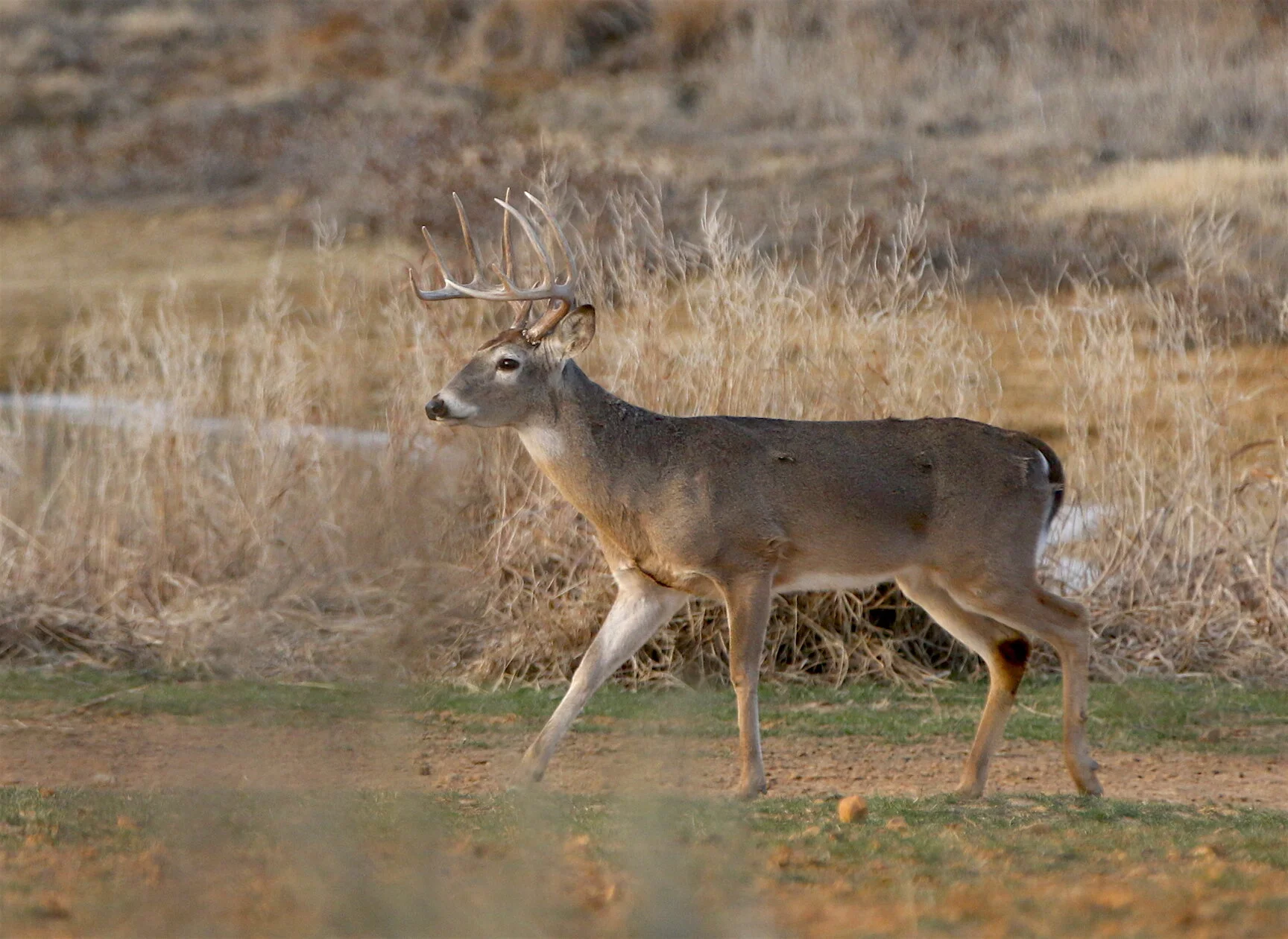
Young whitetail buck
You may have noticed how some old whitetails during the rut develop rich, dark hairs on their foreheads. I always guessed this was the result of rubbing sap and dirt into the hair while making tree rubs. Now I’ve discovered this darkening might be a natural pigmentation that serves as a visual cue indicating the sexual status of the buck. Canadian wildlife researchers G.A. and A.B. Bubenik studied this phenomenon more than 25 years ago (www.ncbi.nlm.nih.gov). Do you suppose the same thing applies to the black foreheads we see on old mule deer bucks? I stumbled onto this while researching eland (www.biomedcentral.com) for an article I’m preparing for American Hunter magazine. Old eland bulls do a number of things to advertise their size, age, mass and physical dominance including: 1. Grow huge dewlaps that augment the size of their necks/briskets 2. Change coat color from tan to blue-gray, which emphasizes bulk. 3. Grow dark, thick mats of hair on their foreheads. 4. Lowering the pitch or frequency of the clicking sound made while walking when tendons snap over a carpal bone. The older and heavier the bull, the lower the frequency of the thicker, more elongated tendon. The idea is that these visual and audio signals will “win the game” without the bulls actually having to fight it out. I wonder if a young whitetail turns tail and sneaks away upon seeing the dark forehead of a mature buck? # # #


It was May, and there were small signs that spring was arriving in northern Quebec. The hardwoods had tiny buds and the pines no longer creaked in the winter winds. Small patches of snow were still visible, but they would soon disappear in the rays of the sun. But spring does not come easy to the north country of Quebec. The ice on Mistassini Lake was not surrendering. It was still thick. Elijah Awashish made his way along the shoreline of the vast lake, hunting and trying to find open water to fish for trout and walleyes. He had a family to feed.